How to get a better district for the same money? Comparing locations honestly
Apartments with the same price tag can deliver radically different quality of life. Let's unpack how to stop overpaying for square meters and learn to see a location's real value — counting not just money, but time, quiet, and comfort.

Why district prices deceive our instincts so strongly
Choosing where to live blows your mind not only with yet another price spike. Instinctively we look for a place where "everything is nearby," but the market dictates something else: prestige and accessibility are often confused with real convenience.
The biggest trap is focusing on proximity to the subway or city center without accounting for walkable access to the rest of the infrastructure. If you ignore everyday-life scenarios, you can end up with an address in a prestigious district with a view of a dumpster and the need to call a taxi for bread.
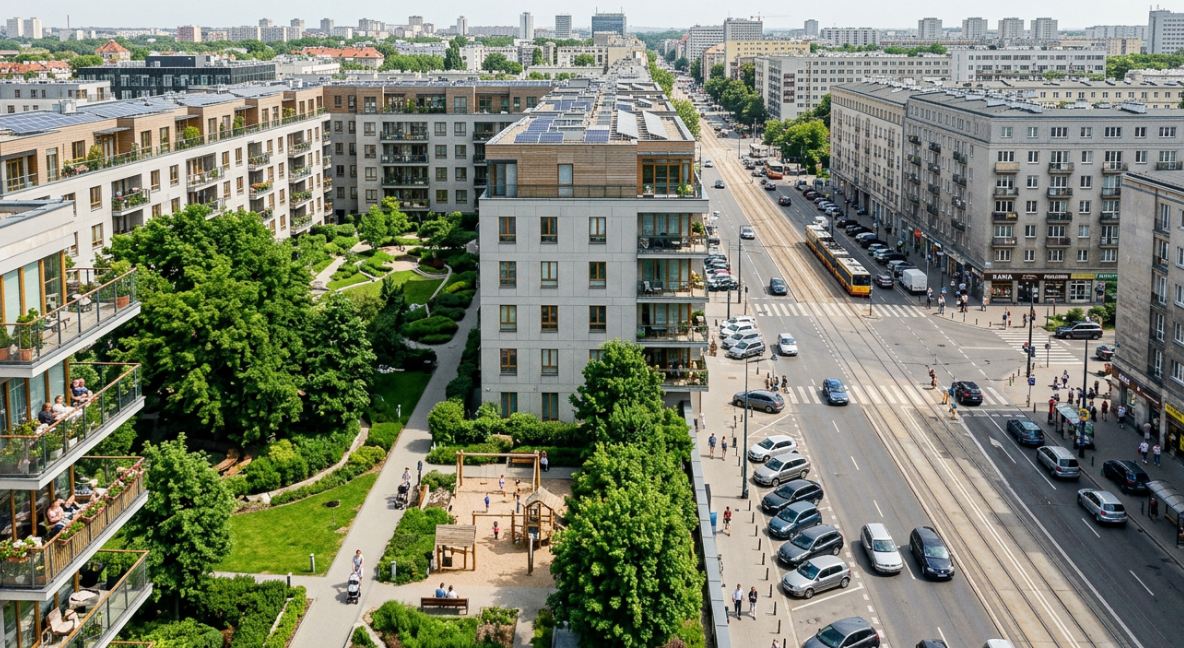

"Cities have a unique ability both to elevate us and to isolate us"
This isn't philosophy — it's the physics of space. When the environment isn't pedestrian-friendly, we shut ourselves in our apartments, and the city becomes just a point on the map, not an extension of our home.
Three urban-planning myths that cost you time
Myth 1: "The subway line is what matters most"
Reality: you pay for proximity to the train, not for the ability to walk to work or school.
Myth 2: "Parks are a nice bonus"
Reality: a park is infrastructure like plumbing, not a decorative option.
Myth 3: "Cafés and shops mean noise"
Reality: balance matters — one coffee shop in the building and ten clubs under your windows have very different effects.
Key idea: a location's wellbeing isn't the sum of nearby objects, but an equation where each factor is a plus or a minus.
Real accessibility is measured in steps
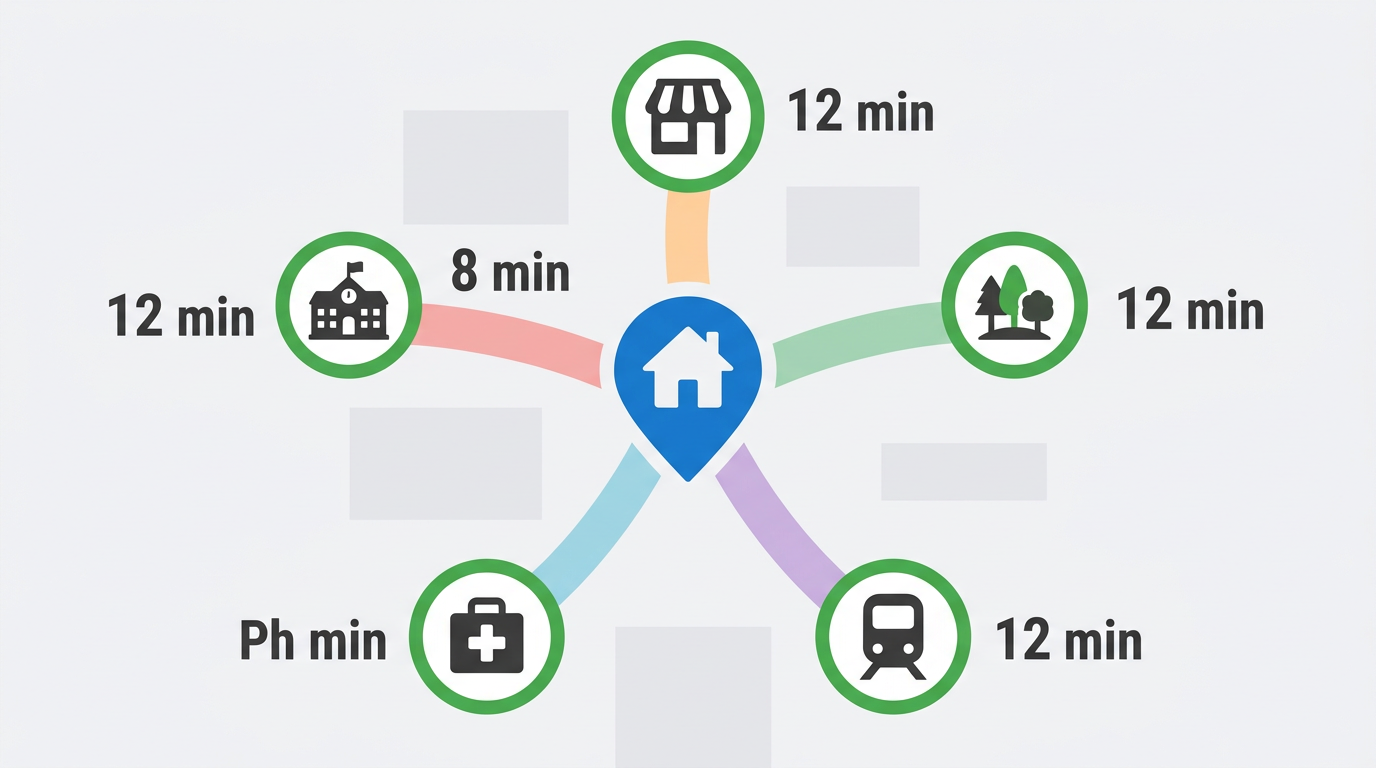
Morning traffic jams or rush-hour crowds hide a simple truth. Jeff Speck in Walkable City calls this "transport self-deception": you save 10 minutes on the ride but lose an hour getting to the station and back.
Developers often mask the lack of greenery with playground equipment in a courtyard well. But it's trees and open space that create the feeling of "quiet and calm" that's hard to measure but easy to feel. What matters is seeing the difference through the lens of environmental balance.
How to actually calculate a location's "value"
Say you're looking at an apartment in a new development. To avoid relying on a realtor's words, try three scenarios from your real life on the neighborhood.
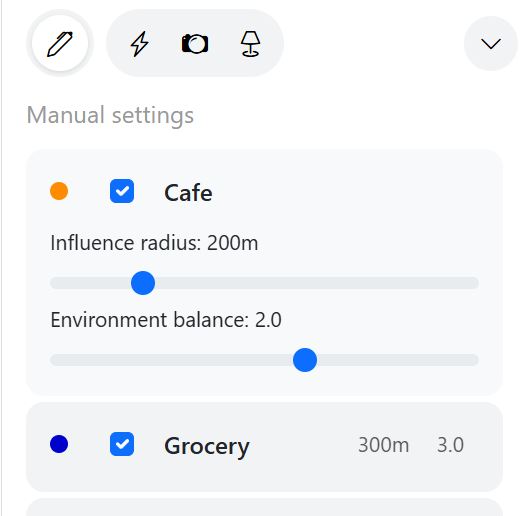
It's important to cut through the noise in your head and keep only what you leave home for at least once a week. An honest location assessment is the sum of pluses and minuses, where minuses are subtracted from the price of your comfort.
Define your "beacons"
Not just "shops" in general, but specifically "farmers' market," "high-rated school," or "quiet square for a run."
Set your comfort radius
Honestly answer how far you're willing to walk to a park: 5 minutes with a stroller or 20 minutes before work? 300 meters and 1 kilometer radically change how often you'll use a place.
Weigh negative impact
Every plus has a flip side. Living right above a restaurant means smells and noise. What about construction next door?
How to understand an address's true potential before buying
The most labor-intensive process is manually going through dozens of factors. It's easy to miss a seasonal ice rink that turns a quiet courtyard into a noise epicenter on weekends, or not notice the lack of a pharmacy within walking distance.

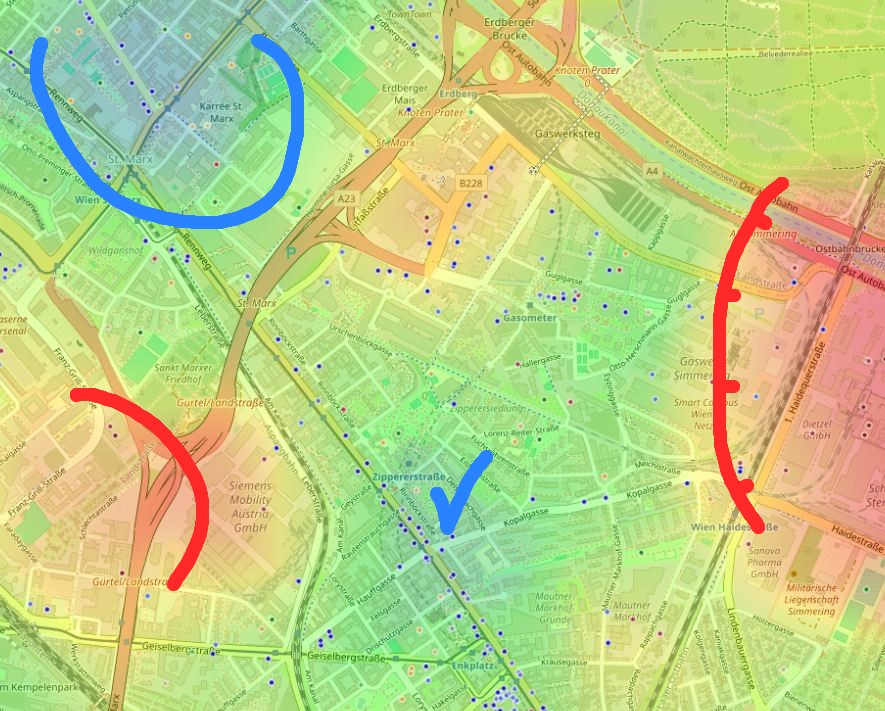
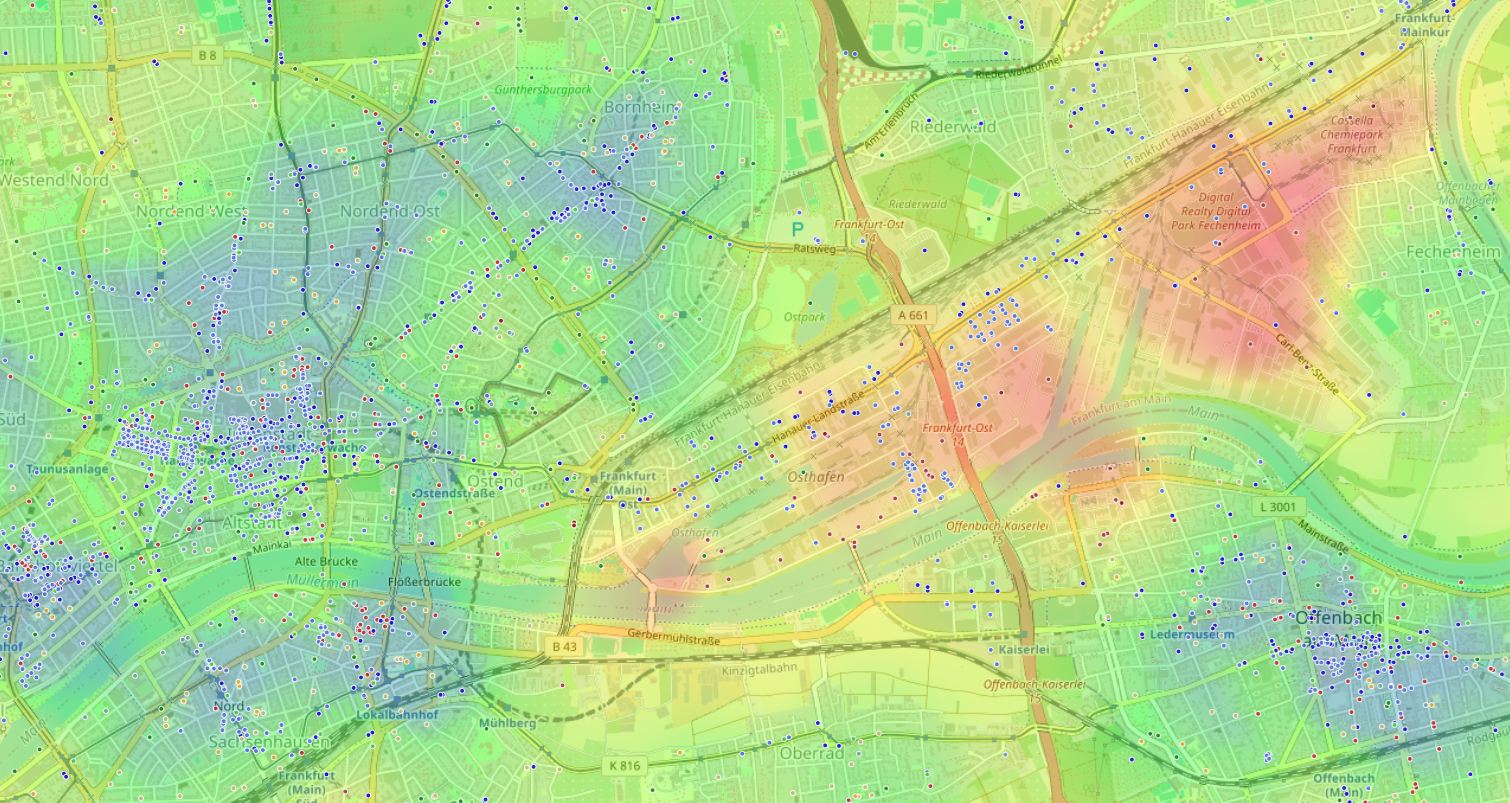
That's exactly why we built HotMap. The tool overlays a wellbeing heat map on the map: you choose what's good for you (green zones, sports, schools) and what's bad (factories, 24-hour bars). The system recalculates "environmental balance" and shows where the city's positive energy concentrates — not just meters to the subway. It's a way to see a location not through the price tag, but through the math of everyday life.
See how it works at your future address before signing the contract.
Choose minutes, not square meters
Comparing districts honestly leads to an unexpected conclusion: price is a function of time and emotions, not just geographic coordinates. You can find an apartment a bit farther from the waterfront but win in quiet, daycare accessibility, and morning walks without the smell of gasoline.
It's demanding analytical work. But start with a simple shift in perspective: look not at where the apartment sits on the city map, but at how many minutes of real life it will give you.
Frequently asked questions
What walkability radius is considered optimal?
There's no universal answer, but urbanists recommend the 15-minute city rule. Everything critically important — park, groceries, transport, pharmacy — should be within 15 minutes of calm walking.
Can you trust developers' infrastructure promises at the excavation stage?
With caution. A map of future construction is only a plan with a horizon of several years. Evaluate only what's already physically there or being completed this season — otherwise you risk years of construction noise instead of quiet.