Your commute eats your life: how moving can give you +10 hours of freedom per week?
A practical guide to choosing a location that saves time and restores energy.

Every week you lose almost a full workday
2 hours a day — the average time a big-city resident spends in transport commuting to and from work. That's 10 hours a week, 40 hours a month, 520 hours a year. Three weeks of pure time dissolved in traffic jams and subway cars.
This article isn't just stating the pain. You'll get a concrete, measurable approach: how to pick a point on the map so the commute shrinks to 15 minutes and quality of life not only holds but grows.

Time on the road isn't a habit — it's a threat
Why the problem got sharper right now
We're returning to offices — fully or in hybrid format. Remote work showed how much time we gained without commuting: whole evenings with family, morning workouts, unhurried breakfasts.
Now that trips are coming back, the contrast feels especially painful. Meanwhile infrastructure didn't get faster: traffic returned to pre-pandemic levels, and in many districts densification outpaced new routes.
In practice this means: choosing an apartment "cheaper but farther," we build systemic stress into our lives that a comfortable car interior or a podcast in headphones can't compensate for.
"Perhaps no other aspect of urban planning affects our happiness as much as time spent traveling. A long commute consistently predicts low wellbeing."
Symptoms you can't ignore
In the morning you're already tired, even though the workday hasn't started.
The thought "I should hit the gym" crashes into reality: after the commute you only have energy for the couch.
You snap at small things because you're chronically sleep-deprived — the commute stole an hour of sleep.
If you leave everything as is, the cost is more than fatigue: a long daily commute is linked to lower life satisfaction, fraying social ties, and worse physical health.
Three main misconceptions about a "good-value" location
At the start of a search it's easy to grab one clear signal: subway nearby, greenery outside the window, or confidence you can get used to the commute. But each argument is tested only by door-to-door time.
Myth 1: "Subway proximity is what matters most"
A home 10 minutes from a station doesn't solve everything if you don't account for rush-hour waits, transfers, and the walk from the last stop to the office.
Myth 2: "It's quiet on the outskirts with lots of greenery"
A park across the road doesn't improve weekdays if the commute takes an hour and a half and you only reach that park on weekends.
Myth 3: "You can get used to it"
The body doesn't get used — it adapts at a cost: cortisol, disrupted sleep, and reduced physical activity.
Count not distance, but real travel time
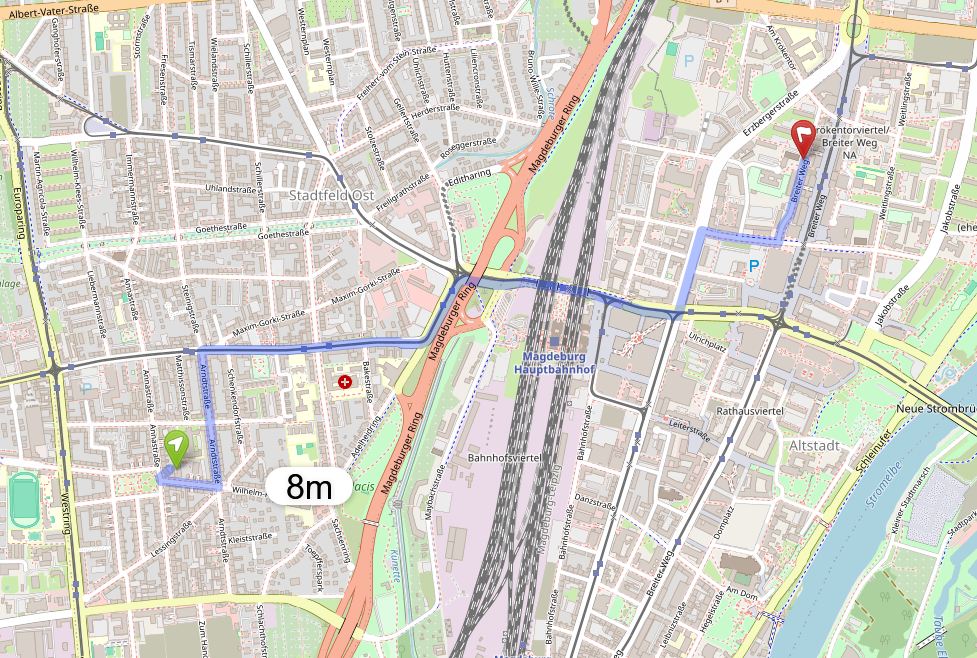
It seems "subway nearby" means a short trip. In reality the route can look like this: 10 minutes on foot, 4 minutes waiting, 25 minutes in the car, 7 minutes transferring, and another 10 minutes on foot to the office.
Total: 56 minutes one way. Almost 2 hours a day, even though "subway nearby."
Reality: what matters isn't distance to a transport hub, but total door-to-door time including walking segments, waiting, and transfers.
What actually delivers +10 hours and why moving works
Say you cut commute time from 2 hours to 30 minutes a day. Here's the math:
+1.5 hours a day
The difference between the old route and the new one is 90 minutes that instantly become yours. An hour and a half on a weekday.
+10 hours a week
That's a full workday you now spend on yourself: family, hobbies, sports, or simply sleep.
Better on all fronts
The new point accounts for not just the office but school, park, shops — all within walking distance. Environmental balance, not just kilometers.
The secret isn't simply picking an apartment closer to the office — that can land you in an industrial cluster without a single square. The secret is finding a place where positive factors converge: a short commute, walkable everyday amenities, and no toxic factors like 24-hour noise and industrial zones.
Urban planner Jeff Speck calls this "walkable capital": a district's value depends directly on how many points you need can be reached in 10–15 minutes on foot.
How to choose a point that gives time back
For a move to actually work, replace the feeling of "seems convenient" with a clear evaluation algorithm.
Calculate real losses
Take a week and log time "from closed apartment door to office door" morning and evening. Add it up and multiply by 4 — that's your monthly "tax rate" on commuting.
Build an environment rating
List objects that make a weekday comfortable: school or daycare within 10 minutes on foot, groceries and pharmacy in 5–7 minutes, park within 15 minutes, café and a commute route without transfers.
Assess the balance
A good district isn't just "there's a park" and "there's a subway." It's when positive factors outweigh negative ones, and an industrial zone 300 meters away doesn't cancel the pleasure of a neighboring square.
Why this matters: without a list of needs you risk repeating the "subway nearby" myth. The subway can be close while school is 40 minutes away — and then child logistics eat the gain.
Environmental balance shows up on the map faster than in listings
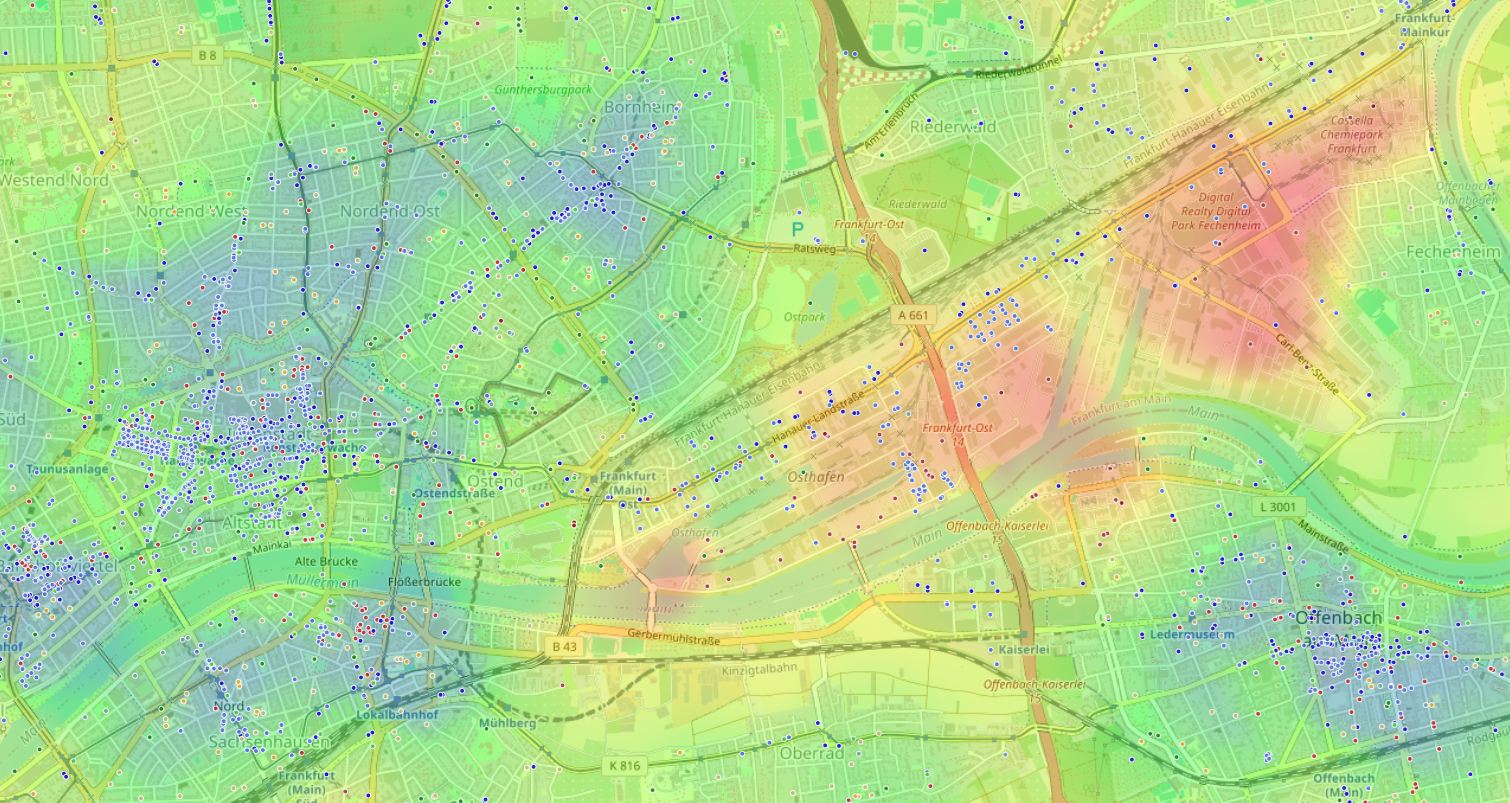
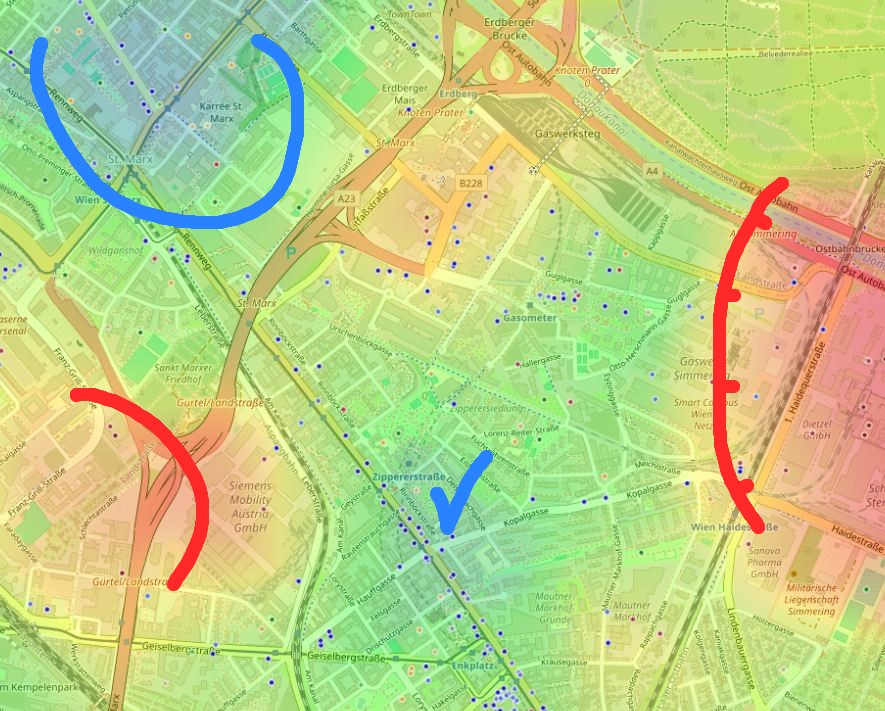
On the heat layer, cool shades show concentration of positive categories: parks, schools, cafés, and everyday services within walking distance. Warm spots are zones where factories, vacant lots, or remoteness from everything you need dominate.
Choosing a point on this layer saves you from blindly scrolling listings. You immediately see where a location helps you live and where it makes you compensate for inconvenience with a route every day.
Time costs you don't notice until you measure them
Weekly logistics time
Total hours by category
Even within one neighborhood, time needed for everyday logistics can differ dramatically. Take a conditional "home" point and calculate the weekly load.
For one point, trips to school, shops, and park take 3.2 hours a week. For an alternative point where school is 30 minutes by bus, the figure rises to 7.5 hours.
The difference is 4.3 hours you didn't account for when evaluating "subway proximity." That's why calculating time costs for all regular routes isn't a whim — it's the main criterion for saving 10 hours.
How to turn analysis from routine into a decision in one evening
The approach described can be done manually: open maps, plot points, calculate distances to each important object, estimate factor balance. But if you want to see quality of life on a property map in one evening — not price — HotMap makes that possible.
Modes for your life scenario
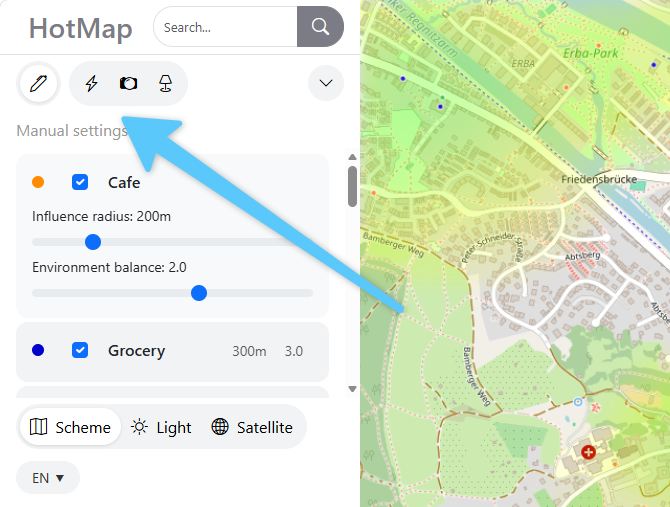
The system already tunes environmental balance to the task. "Quiet and calm" mode highlights local comfort oases — where park, school, and pharmacy are close but there are no noisy highways or factories. "Nightlife" mode shows points of maximum café and club concentration.
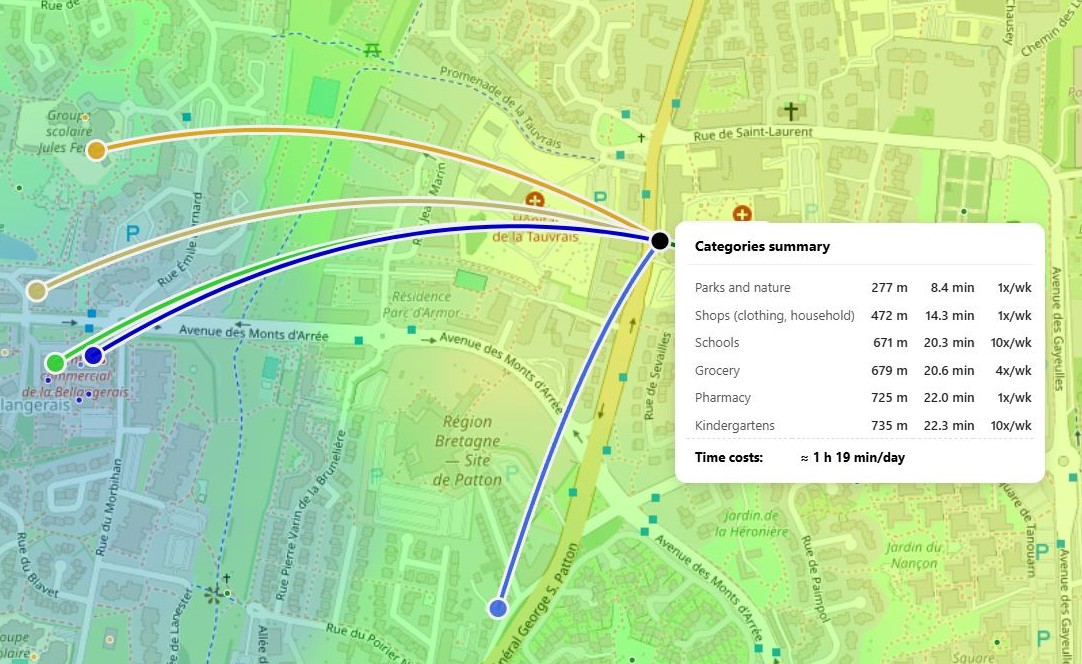
Time costs per point at a glance
You place a point on the map and immediately see how many hours per week you'll spend traveling to key objects accounting for visit frequency. No manual calculation — the decision about a "good-value" location becomes measurable.
Such a tool doesn't decide for you, but removes the main barrier: the inability to quickly compare dozens of districts on a single, objective scale of environmental quality.
See how it works on a real map
Getting time back as the best investment
We're used to evaluating housing by price per square meter. But the real price is life hours spent on travel. You can buy a cheaper apartment and give the commute 520 hours a year.
Or — calculate the balance once and get back three weeks of time, fresh energy in the evenings, and the ability to live, not just get there.
Moving isn't about changing an address. It's a strategic choice: you invest effort in changing location, and dividends come in time. Every day.
Short answers to practical questions
I rent, I don't buy. Does this apply to me?
Absolutely. Renting gives even more flexibility: you're not tied to a mortgage and can change districts as soon as you find a point with the ideal "commute — infrastructure" balance. All time-cost calculations work the same for rent and purchase.
I have a family, everyone has different routes. How do I search for a point?
Rank priorities. Usually there are 1–2 key points that create maximum load: the main earner's job and the child's school or daycare. Optimize for those first, then check other important objects within 15-minute accessibility.
Can moving really give +10 hours?
Yes, if you cut the commute from 2 hours a day to 30 minutes and cover everyday needs within walking distance. 1.5 hours × 5 workdays = 7.5 hours on work alone. Add savings on everyday trips — and you get 10 or more.