Cottage village or old private sector: the price of quiet in hours of life
Let's unpack what's hidden behind beautiful facades and learn to measure comfort not by emotions, but by time.

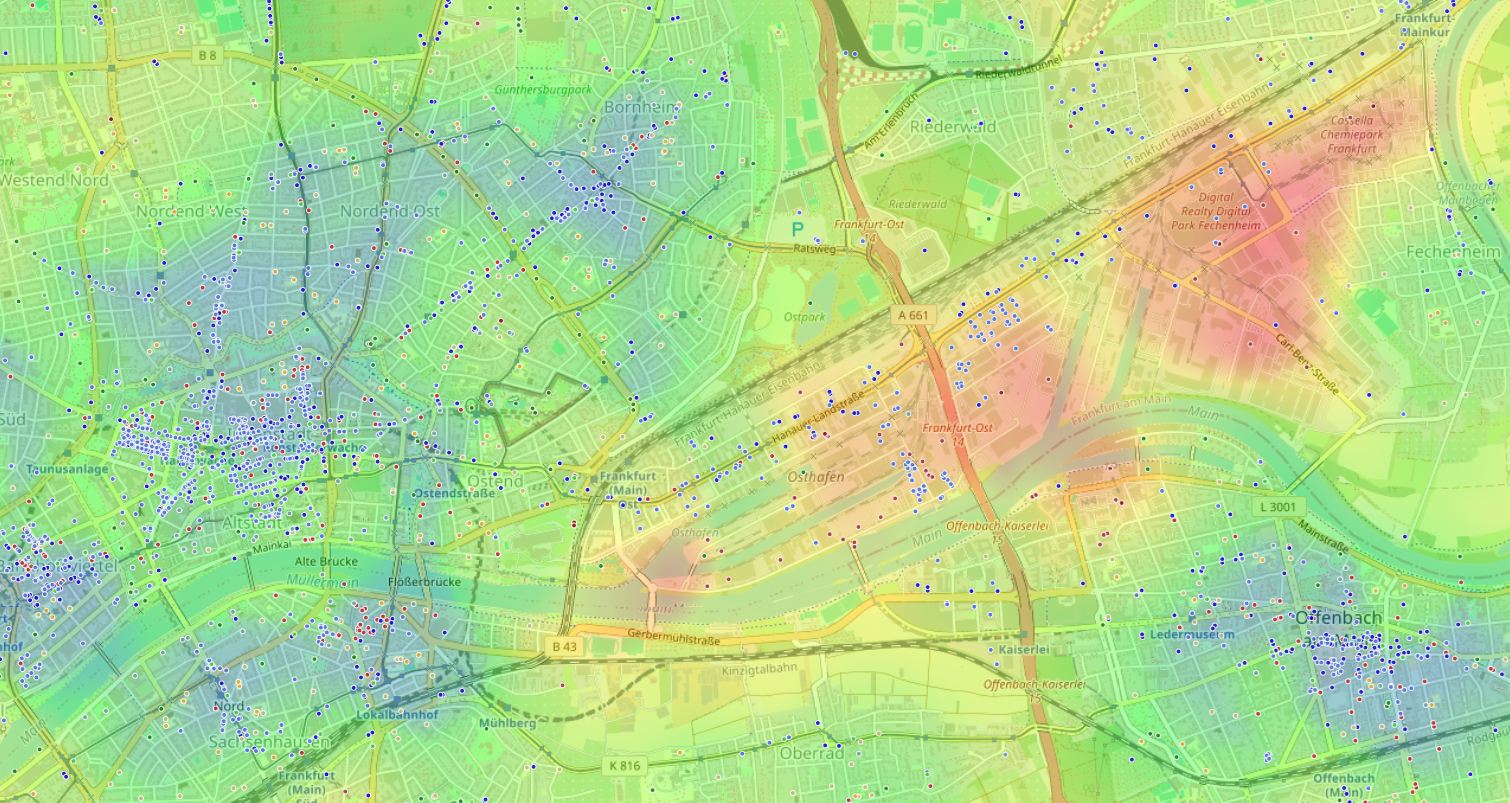
Cottage village
Gated territory, concierge, perfect lawn.
Old private sector
Chaos of "private builders," grandmother's front gardens, and life bubbling right behind the gate.
But the numbers say something unexpected: the "chaotic" old sector often beats the planned cottage village on the main criterion — environmental balance.
Why this question is getting louder
Moving outside the city stopped being just a dream of "a house with a plot." Remote work and flexible schedules blurred boundaries, but at the same time sharpened dependence on what's within 15-minute walking distance.
Few people buying a home count how many hours per week will go to "simple logistics": school, groceries, sports, pharmacy.
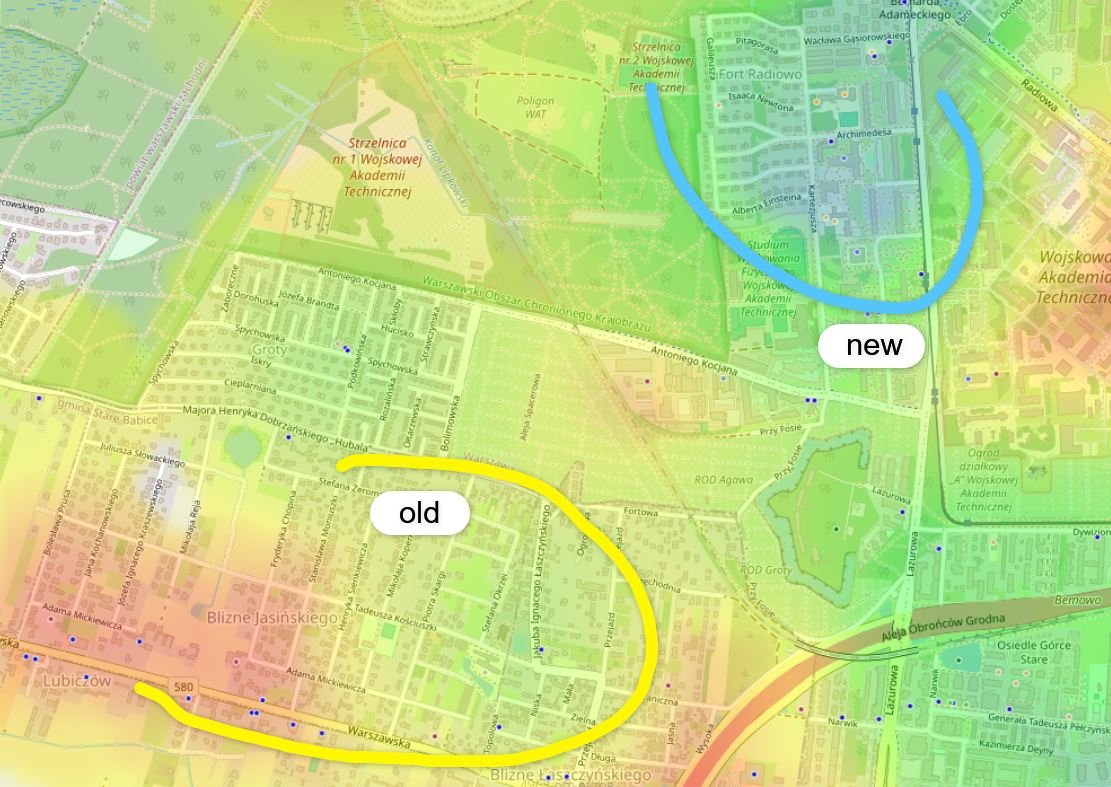
In this case the new district's infrastructure outpaces the old one in comfort.

"Accessibility isn't about distance. It's about time and route quality. One kilometer along a busy highway equals five kilometers along a shaded sidewalk in a pedestrian's mind."
Ignore this factor and you risk getting a beautiful home that becomes an anchor: 10–12 hours a week go to driving around, and spontaneous meetups with neighbors at the local bakery remain a Pinterest picture.
Myth vs. reality: children's safety
In a cottage village children are completely safe because of a gated territory and video surveillance.
Safety isn't created by a fence, but by low car traffic and dense social oversight. In old neighborhoods where everyone has known each other for decades, natural supervision works far better. Plus — school and clubs within walking distance spare daily trips on busy highways.
Time matters more than kilometers
Family weekly time budget
Total hours on logistics
Comparison of weekly time spent on logistics for a family of 4 in two locations. Cottage village — 11.2 hours; old private sector — 4.7 hours.
Environmental balance isn't proximity of objects in a straight line — it's the real time budget a family spends accessing everyday amenities.
HotMap (and similar calculations) converts distances to time, accounting for visit frequency. For example, you need the pharmacy not every day, but once a week — yet if it's a 15-minute drive, that adds up to 13 hours a year for this category alone.
Take two real points near Moscow — the new Emerald Hills development and the old Malakhovka neighborhood. Total time costs in the first case were 2.3 times higher at the same house price. The reason — sparse infrastructure and no connected pedestrian routes.
Square meters in the listing say nothing about what matters — how much time you'll spend on the road. That needs to be counted.
Three factors that define environmental comfort
Service density within 800 m
Bakery, greengrocer, coffee shop, pharmacy, playground. Four out of five within walking distance — and balance shifts sharply positive.
Quality of pedestrian connections
Sidewalk, lighting, crossings. A home on a quiet street with a tree-lined path beats a mansion by an expressway.
Grassroots social capital
Shared holidays, neighbor chat for help, conversations at the gate. In old neighborhoods this grows on its own.
On School Street in the old sector they've bought bread without a car for 30 years; in the cottage village grocery delivery becomes a forced norm.
"A pedestrian-friendly city gives you three hours of life back per week."
In villages, community more often requires effort to create artificially.
What to compare when you're facing a choice
| Cottage village | Old private sector | |
|---|---|---|
| Engineering infrastructure | Cottage village Modern, centralized | Old private sector May be outdated, needs checking |
| Community | Cottage village Often anonymous, built from scratch | Old private sector Stable, long-standing ties |
| School / kindergarten on foot | Cottage village Rare (otherwise plot price is many times higher) | Old private sector Often 5–10 minutes on foot |
| Shops near home | Cottage village Almost never | Old private sector Usually 1–2 within walking distance |
| Quiet and privacy | Cottage village High (but at the cost of isolation) | Old private sector Moderate, compensated by life around you |
| Building flexibility | Cottage village Strict rules, can't add a workshop | Old private sector More freedom for self-expression |
Self-diagnosis checklist
- In the morning you leave home and within 10 minutes on foot reach at least one place where you can buy fresh bread and have coffee.
- Your child's school route doesn't cross highways and takes no more than 20 minutes on foot.
- You can name three neighbors you'd warmly greet on the street.
If at least two items aren't met — environmental balance is likely broken, regardless of house type.
At this stage a primary visual assessment can be done in a few clicks — just look at the environmental heat map.
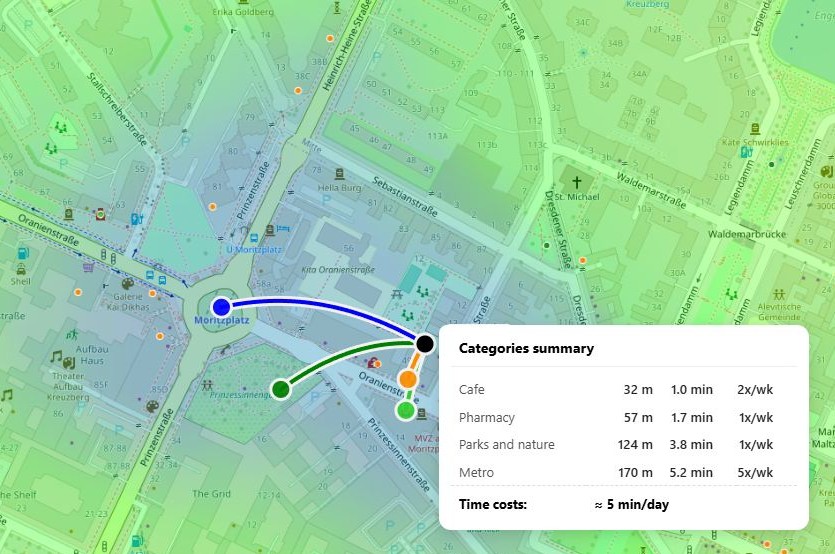
How HotMap helps compare two different worlds
One of the main barriers when analyzing two completely different neighborhoods is how to bring together dozens of factors: distances, time, trip frequency, and subjective "weight" of school or park.
That's exactly why we built HotMap: it overlays a semi-transparent heat map on an ordinary map and immediately shows where environmental balance is maximal (blue zones) and where it's critically low (red).
You don't need to manually measure distances to every point. You simply choose what matters (school, nightclub, market, metro), and the system calculates walkability and sums time costs for your life rhythm. It doesn't replace a personal visit, but compresses weeks of analysis into an hour of meaningful comparison.
Choose not "trendy," but "proportionate"
Cottage village and old private sector aren't just different house types. They're two lifestyles with different time prices. The first sells a dream of isolation from noise, but often adds hours on the road. The second may look imperfect, but gives what urbanists call "daily seamless mobility" — life without commuter train schedules and endless traffic.
There's no universally better option. But there is a method that won't let you go wrong: stop evaluating a home by the picture and start measuring the environment by time. Once you see the heat map of your potential life, the choice becomes much easier.
Common questions
Can you combine a private yard and walkable access to everything?
Yes, but such places are rare and cost more precisely because environmental balance is naturally high there. A service like HotMap helps find such "blue oases" even in non-obvious neighborhoods, without overpaying for village brand.
Should you consider remote options with a 20-are plot?
Only if you're consciously ready to trade 10+ hours a week for absolute quiet and have resources to compensate for that isolation (second car, constant delivery, all family members working remotely). The time-cost chart sobers you up quickly.
What to look at first: category summary or overall heat map?
Start with the heat map in "Quiet and calm" mode — it aggregates the most important everyday categories. Green and blue spots are potential points for deeper analysis. Then switch to manual mode and adjust radii to your habits.