A country home for living, not just barbecues: how to check if a plot is suitable for permanent residence?
Why do you so often want to go back to the city after two weeks at the dacha? Usually it's not the blues — it's a location mistake: the place was chosen with the heart, not with everyday routes in mind. Let's look at how to turn a dacha from a "suitcase without a handle" into a real place to live.

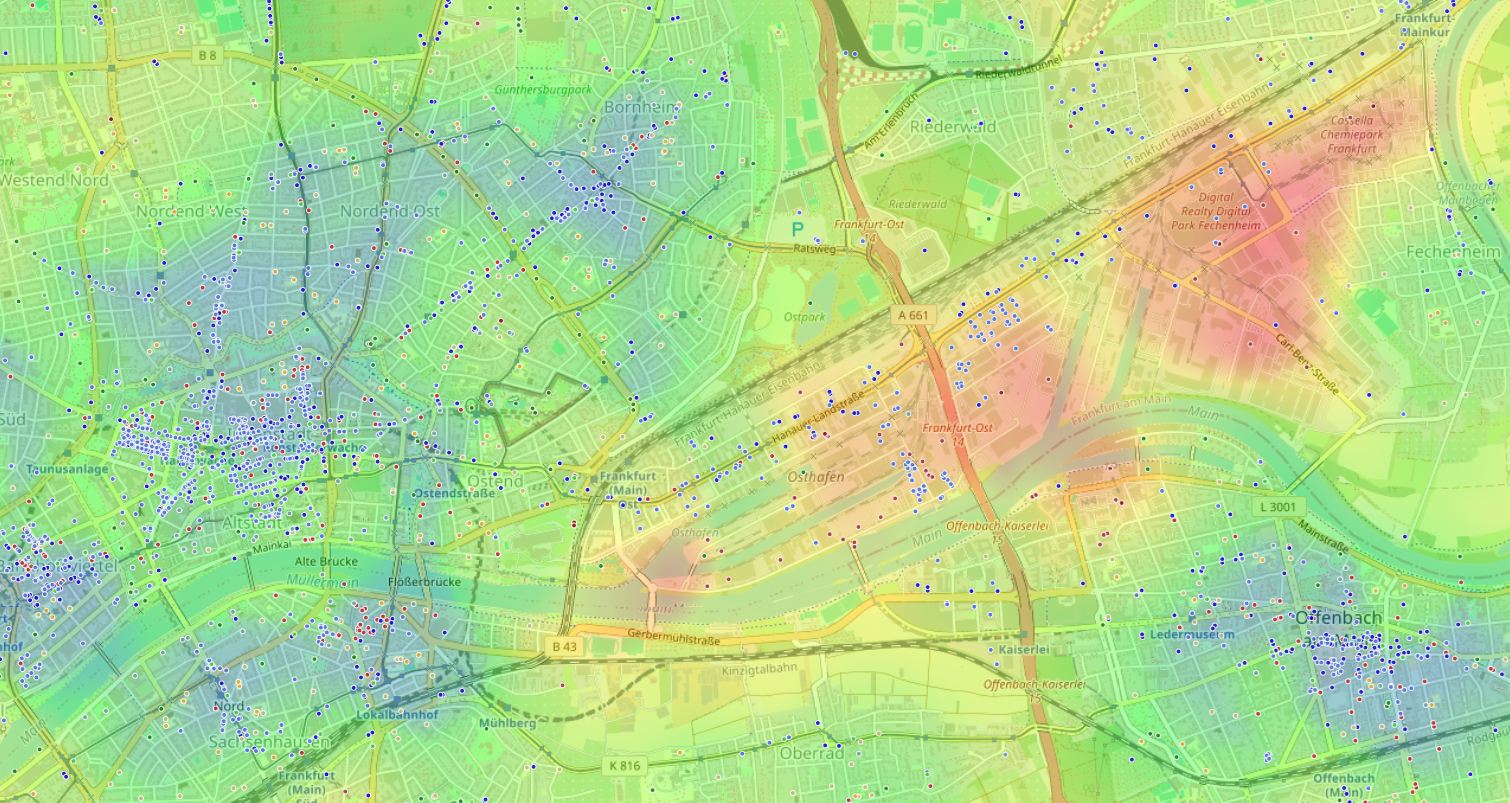
First check the weekday scenario, not the house
Fresh air, space, and your own veranda won't save you if every day turns into a chain of trips: school, grocery store, after-school club, pharmacy, work. A beautiful plot can be inconvenient simply because there is no living environment around it.
Suitability for permanent residence is measured not by house size or fence beauty, but by how easily your family can get through an ordinary Tuesday without feeling like they're running a logistics marathon.
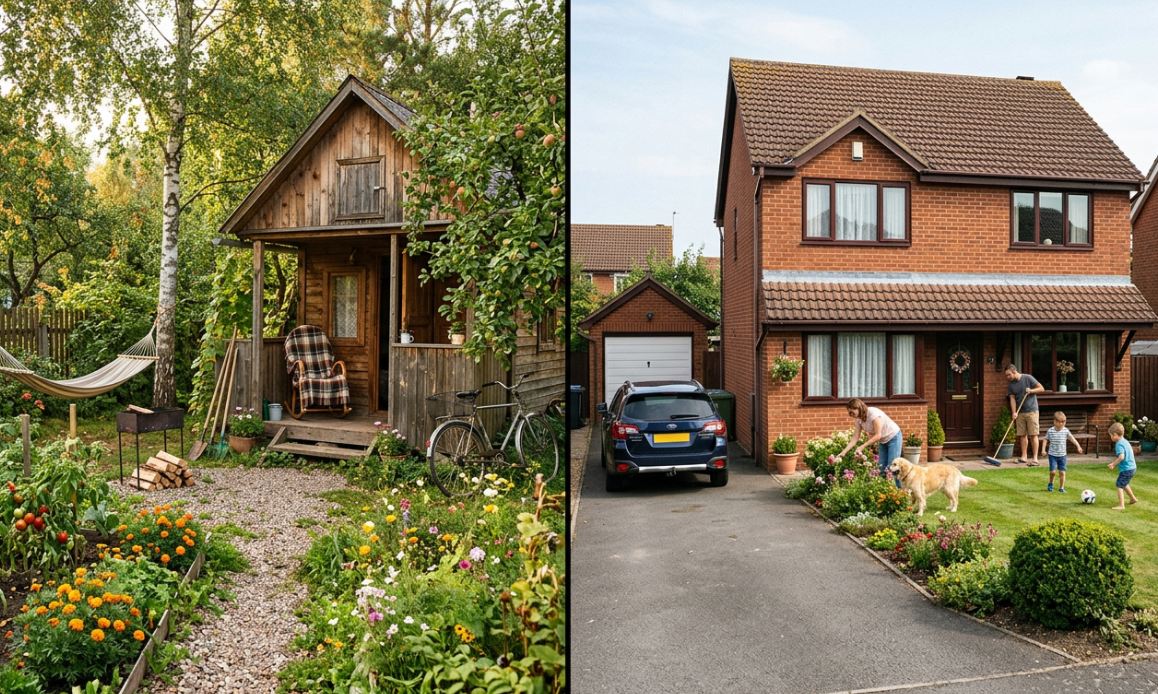
Why we're looking beyond the city again
Rise of remote work
People are moving not only for quiet, but for quality of life without urban noise.
Infrastructure hunger
Many villages were built for Friday barbecues, not for schools, pharmacies, and daily shopping.
The paradox is that the country dream often breaks on the simplest needs: buying fresh bread in the evening, taking a child to school, quickly getting to the gym or doctor.

"If you design a city — or choose a place to live — around the car, you get cars and traffic jams. If you design it around people, you get community and accessibility."
This idea works not only in a metropolis, but at the scale of your plot. A good location attracts life instead of forcing you to solve every little thing with a car trip.
Red flags: what an unsuitable plot looks like on a map
The main myth: what matters most is distance to the ring road. In practice, kilometers say almost nothing. You can live 20 km from the city and spend two hours commuting if there's only one bridge, a narrow highway, and endless traffic.
What matters is time, connectivity, and environmental balance. Sometimes a plot 30 km from the center near a commuter train station is more convenient than a house 10 km away that you can only leave through an overloaded interchange.
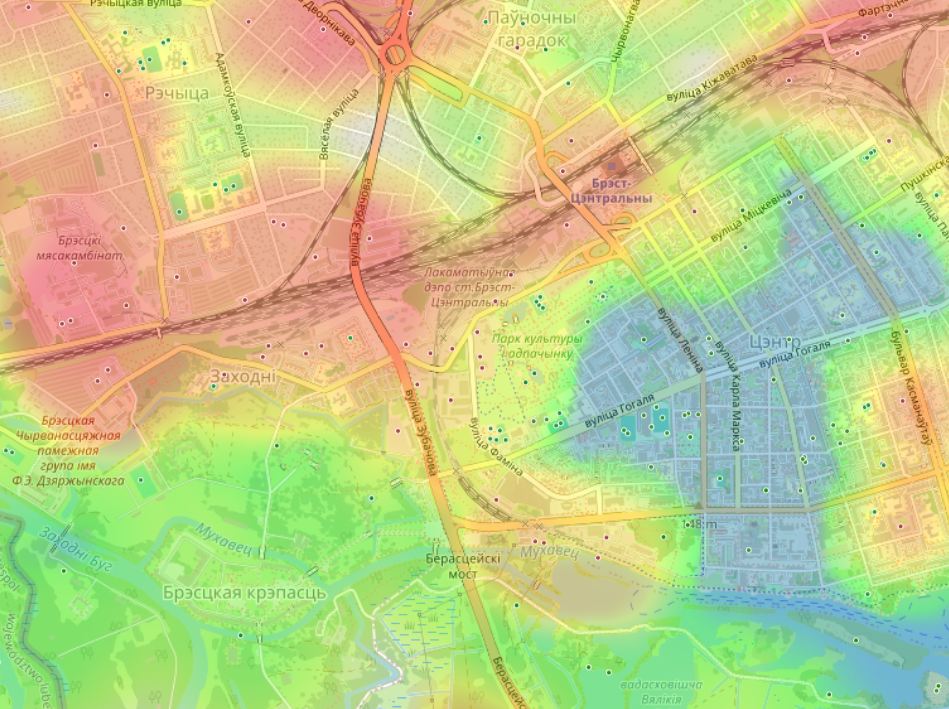
The gravitational map method
Look not at individual objects, but at what they do to your everyday life. A pharmacy, bakery, and decent coffee shop add life. A noisy highway, landfill, or industrial zone create repulsion.
Red cluster
Gas stations, cemeteries, landfills, industrial zones, noise and smell. The radius of influence often starts at 500 meters.
Yellow cluster
Schools, kindergartens, bus stops, and markets are needed every day, but close proximity can bring noise and traffic.
Green cluster
Parks, sports, cafés, and cultural venues create an environment for living, not just for overnight stays.
Practical takeaway: the ideal plot is not an empty field, but the "eye of the storm" near useful points and outside strong negative zones.
Counting feet and wheels
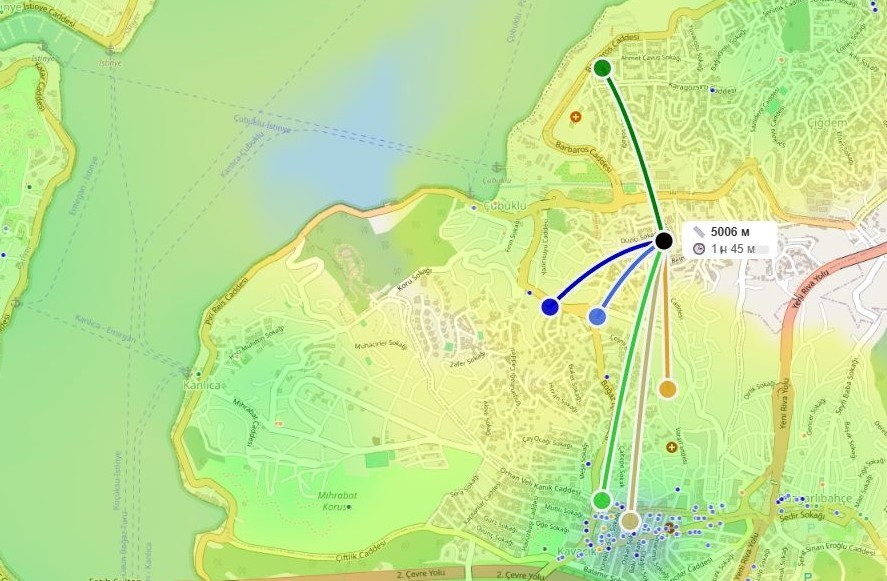
Weekly logistics time
Total hours by category
Without analysis it seems like you're buying freedom. In reality you might buy a place where a child can't go out for a walk unsupervised and bread requires a 15-minute drive. With a tool you see in advance how much time the family will spend on routes per week.
Suitability for permanent residence begins where walkability beats driving.
Check the 15-minute rule. If it takes 40 minutes to walk to the nearest grocery store along a fence on a dirt road, that's not permanent country living — it's survival with a beautiful facade.
Three-step plot self-diagnosis
Turn on "Quiet and calm" mode
Come on a weekday in November. Check whether roads are cleared, lights are on in windows, and heating works.
Visualize environmental balance
Overlay noise, smell, industrial, park, water, and good private-sector zones on the map.
Count the week in minutes
Plot routes for school-work-club-grocery-sports. If it adds up to more than 8–10 hours for the family, the house will start taking your life.
When the calculations are harder than they seem
All of this can be done manually: open ten map tabs, calculate routes, compare objects, and enter data into a spreadsheet. But the environment changes: a store closes, a park gets built over, an industrial zone is reclaimed, and a new road shifts familiar flows.
That's why we built HotMap. The tool overlays a "Quiet and calm" or "Cultural center" scenario on a plot in seconds and shows the real environmental balance, not a developer's sales brochure.
See how it works at your future address before signing a contract.
Not just a house, but a living environment
You can rebuild the house, replace the roof, repaint the fence. But you can never move the point on the map. Choosing a place for permanent life means choosing your weekday scenario, your morning mood, and your evening commute fatigue.
Start with a cold analysis of geodata. Check the plot with a heat map, and you'll quickly see whether the dacha will be a place of strength or a place of obligation.
Frequently asked questions
Should I consider a plot if there's nothing nearby but it's very cheap?
Only if you consciously want to live autonomously, almost like on a remote homestead. A low price often means the capitalized cost of your future travel time: buy cheaper, pay in minutes and hours.
What matters more for permanent residence: walkable access to a park or to a commuter train?
For permanent living, the commuter train is usually primary: it connects you to the city, work, and major infrastructure. A park improves quality of life, but without reliable transport you may simply not have time to use it.