Great apartment, so-so district. How not to regret moving?
You'll get a clear algorithm: how to check a district in 3 days and stop buying a "pig in a poke" based only on renovation photos.

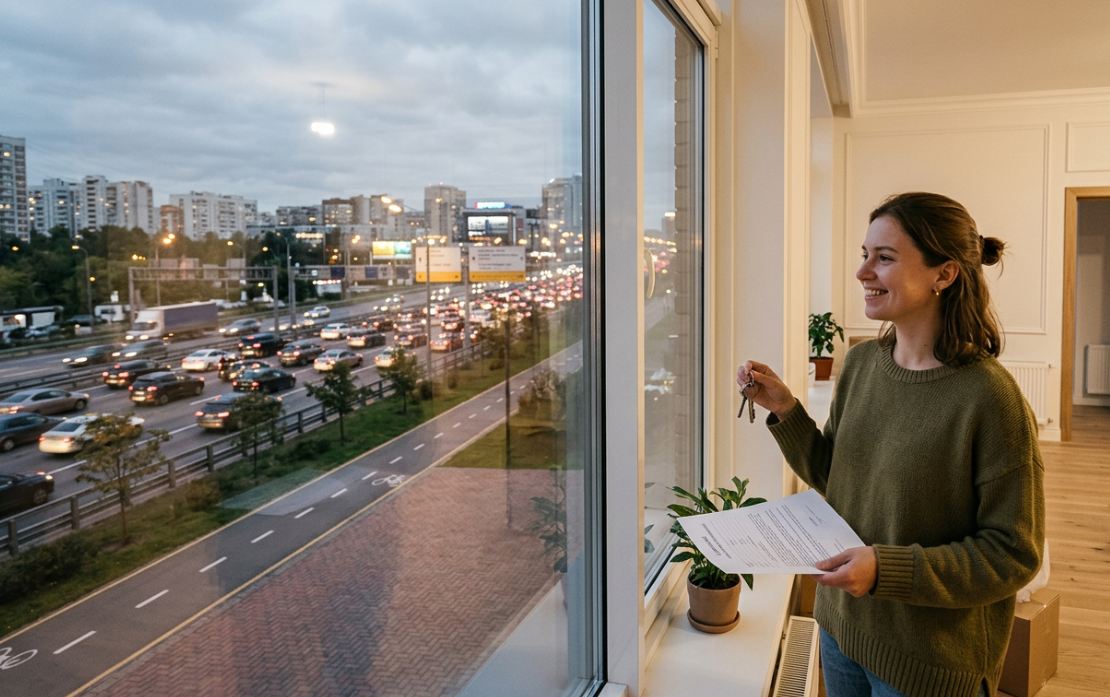
Anna searched for three months for the one. High ceilings, panoramic windows, fresh renovation. Contract signed, keys in hand. A month later she was crying, reheating dinner in a hurry — the nearest decent supermarket turned out to be a 40-minute walk, coming home from the metro at night felt scary, and the only sound outside was the hum of the highway. The apartment was perfect. The district wasn't. Anna missed the main thing: home isn't just walls.
Why we get it wrong when choosing housing
We scroll through 20 listings in a row. Compare layouts, square footage, ceiling height, view from the window. Only at the last moment glance at the address: "Well, metro seems nearby, so it's fine." That's a trap. Our attention is wired so the physical space of the apartment completely pulls focus. Research on real estate buyer behavior confirms: district is a secondary criterion online but reason #1 for disappointment after moving.
Today, when remote work shrinks daily life to a 15-minute walking circle, surroundings matter more than transport arteries. District quality isn't prestige — it's hours of life spent getting to "simple things."
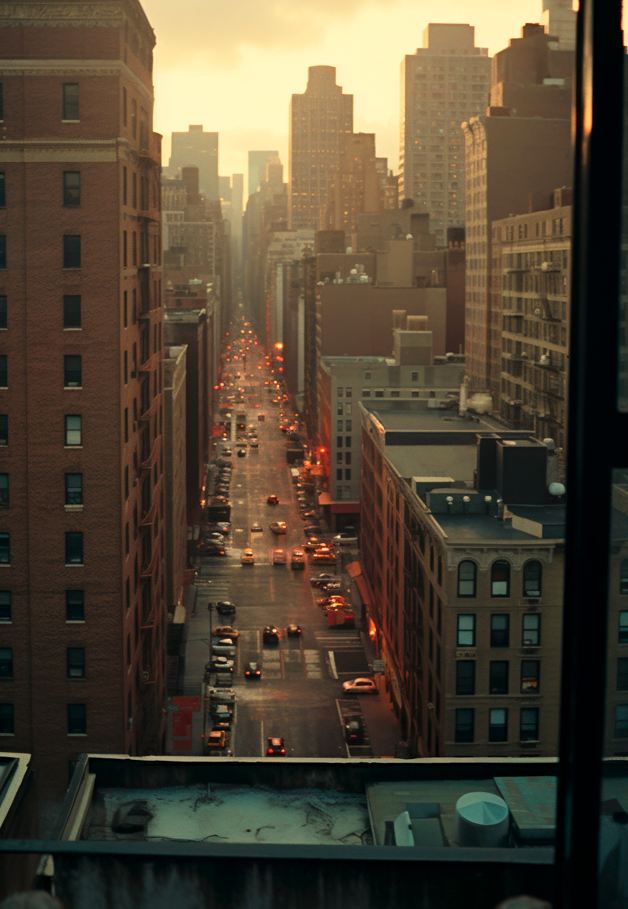
"You can have a fantastic apartment, but if all you see from the window is a parking lot and a noisy highway, and the nearest park is a 30-minute walk, your daily happiness scenario will be undermined."
What happens if you ignore this layer of reality? Symptoms appear fast: irritation from a "simple" bread run, wanting to call a taxi to the metro, feeling isolated. The district starts to press, and the apartment no longer delights.
Three deadly district illusions that cost you peace
Illusion #1: "Main thing — metro nearby"
Metro 10 minutes on foot = life sorted. Everything else doesn't matter.
Metro only answers "how to get to another district." But 80% of your daily trips are pharmacy, daycare, groceries, a walk.
Don't measure distance to metro — measure your "daily triangle": shop — daycare/school — place for a walk.
Metro is an easy symbol on the map, checked in a second. Nobody measures real bakery access. If all that needs detours, you're tied to a metro car even for a bottle of milk.
Illusion #2: "With a park and school in the yard I'm set"
Myth: Good when there's a school under the windows and the next building is a popular café.
Reality: Every object is both plus and minus. School = children's laughter and daytime bustle, but noisy breaks and morning traffic jams. A nightclub adds life to the district but subtracts sleep for residents within 200 meters.
Environmental balance is an equation where daycare might score +8 for a family with a toddler and -5 for a solo remote worker.
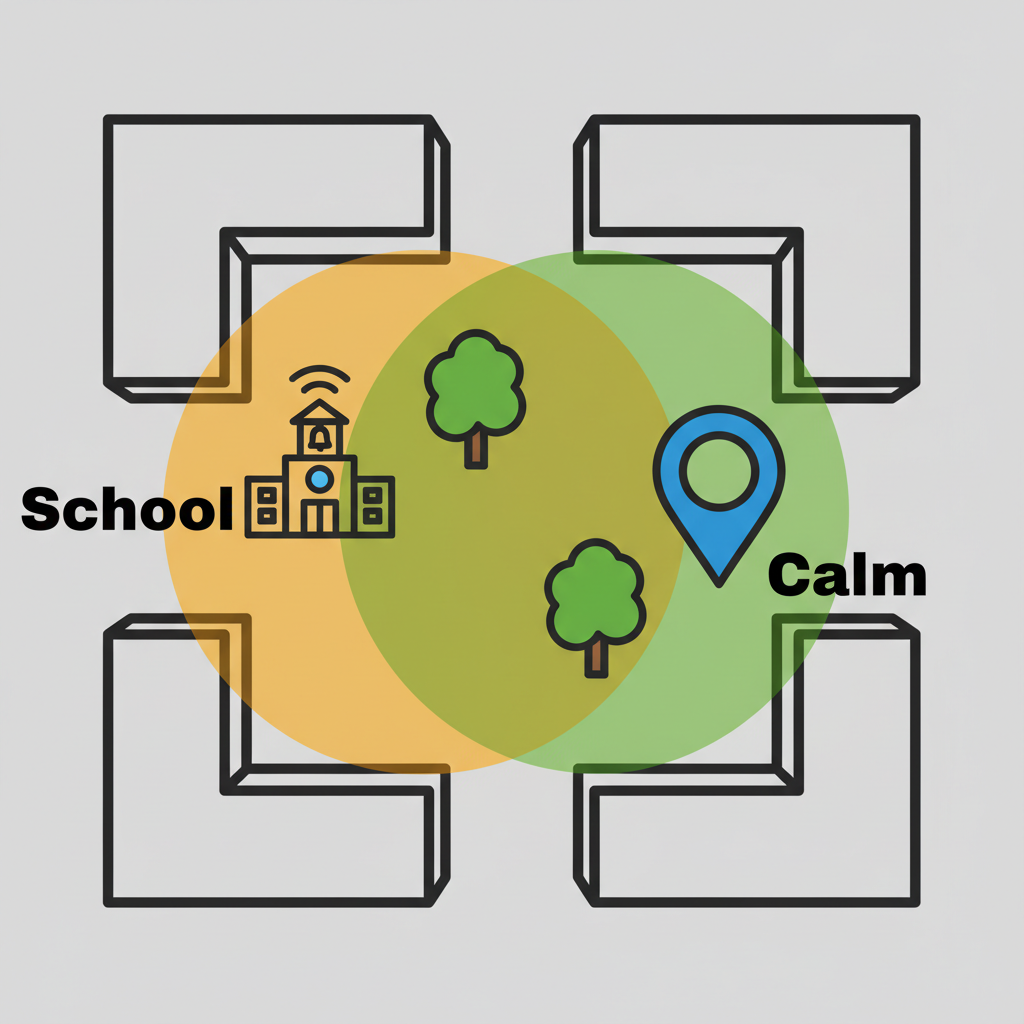
"Eyes on the street" — Jane Jacobs' famous principle: safety isn't created by patrols but by constant natural presence of people watching the street.
A café with a summer terrace across from your building is your free evening security concierge. An industrial zone with a blank fence — the opposite.
Illusion #3: "Time to everything is minor — I'll get used to it"
Mandatory weekly trips
Metro 12 minutes from both points
Imagine two apartments. Metro from both — 12 minutes. But in the first, supermarket is 5 minutes on foot, pharmacy 3, park 7. In the second — 25 to the shop, 18 to pharmacy, park only by bus.
Seems like "metro nearby" in both cases. But in the first you'll spend 2.5 hours a week on mandatory trips, in the second — 9 hours.
⚡ Measure not meters but time — your time per week.
Three factors that turn a district into home or into hard labor
1. Pedestrian permeability, not just "nearby"
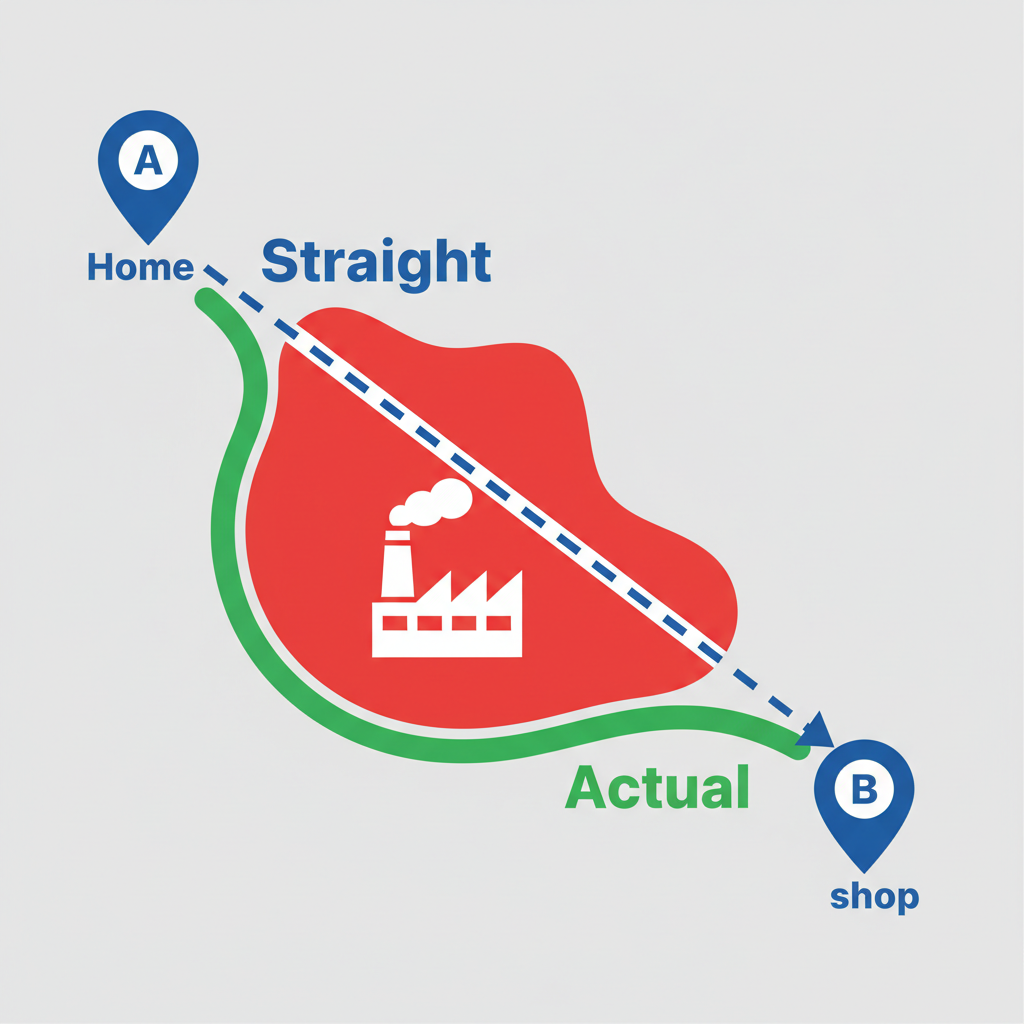
Many think: "There's a shop — already good." But if the path goes through a dark underpass, along a fence with no streetlights, looping around an industrial zone, you'll go once, twice, then order delivery. Straight line on the map ≠ comfortable route.
2. Background noise you don't notice at the viewing
We listen to the apartment in the silence of a daytime showing. Real noise arrives at 7 a.m. with the garbage truck and at 11 p.m. with bench conversationalists. A district's sound spectrum is a characteristic you can't spot on a map.
3. Evening scenography: light, people, shop windows
Safety isn't neighborhood legend but the number of lit shop windows and apartment windows on the route from metro to entrance. If your path goes through blank fences and dark arches, every evening becomes a quest.
How not to regret moving: in practice
Day 1. Cartographic audit
Open a map. Not just Google Maps but one where you can overlay walkability and categories that matter to you: schools, pharmacies, groceries, gym. Mark every point you need at least weekly. Measure time to each along a real walking route, not a radius circle. Add time into a weekly route: how much goes to daily life? If it's over 10 hours — not your district.
Common mistake: measuring distance from metro, not total time on daily errands.
Day 2. Scenario test drive
Visit the district at three times: weekday morning (8:00–9:00), weekend afternoon, weekday evening (20:00–21:00). Walk from entrance to metro, shop, playground. Turn on "resident mode": imagine needing bread in the rain at night or returning after a workout. Note feelings: light or dark, noisy or quiet, many people, do you feel safe.
Day 3. Environmental balance
List what's vitally necessary within walking distance and what would be a bonus. Then estimate "negative" objects: night bar, highway, construction. The goal isn't the "quietest district" but one where pluses outweigh minuses for your lifestyle.
You can speed up
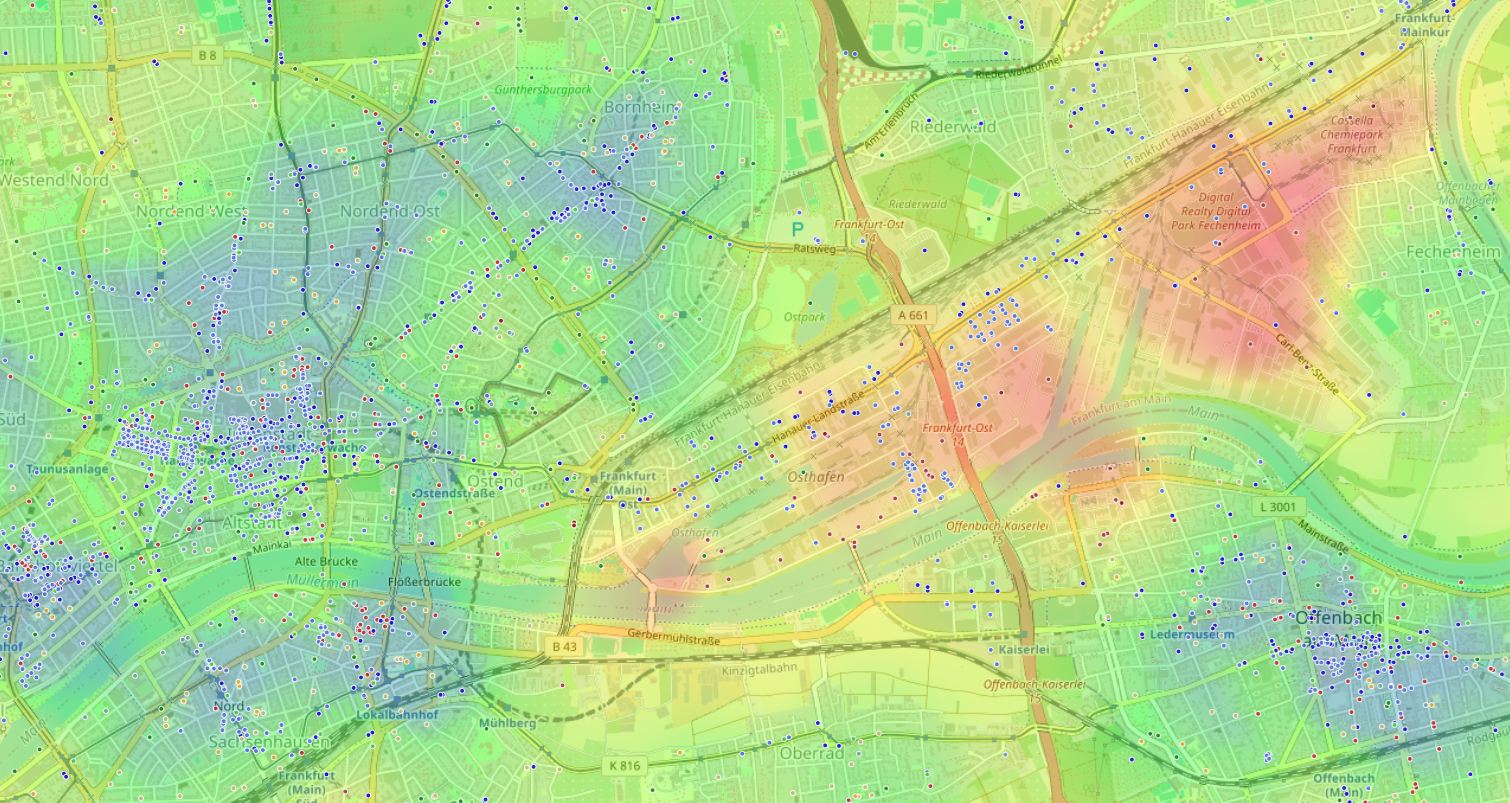
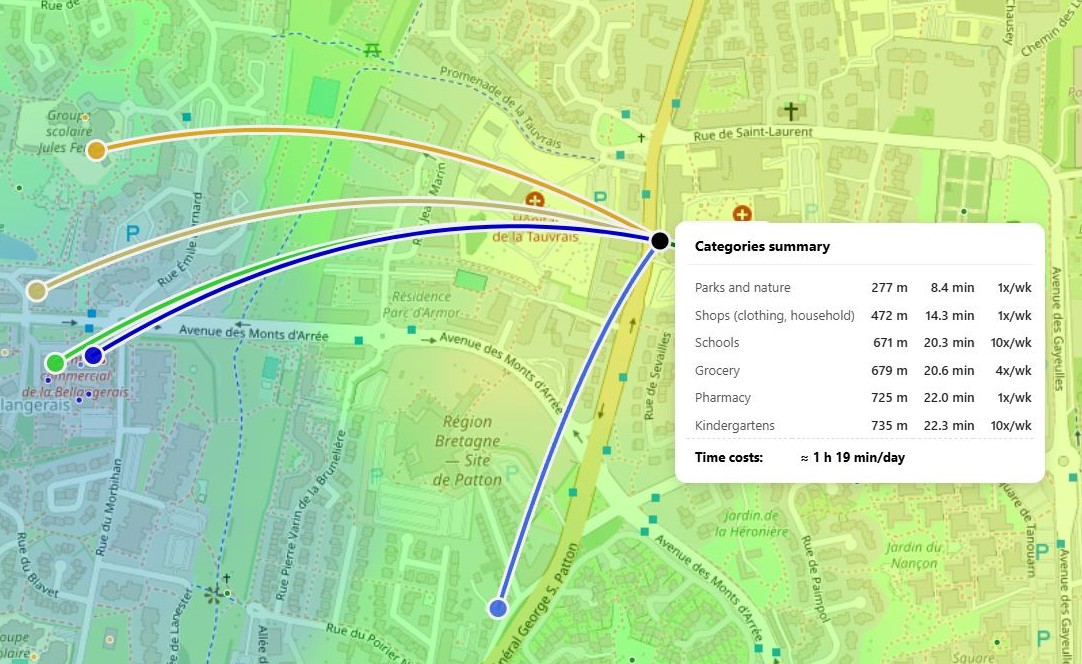
Walking the district with a stopwatch and notebook is honest but slow. The hard part is gathering all points at once, weighting them, and seeing the whole picture, not a fragment. HotMap solves this: it overlays a heat map where red is concentration of factors that bother you and green is maximum comfort for your query.
Move the slider and instantly see what environmental balance forms at a specific point and how many hours per week your mandatory routes will take. Try checking your current address or a location you're considering — faster than three days of walking and opens your eyes to what the map doesn't show.
See how it works on a real example
The main thing to remember
When you move, you're not buying square meters but a lifestyle. The district is the stage where your daily life unfolds. If the stage is wrong, even brilliant acting won't save the show. But if you know how to read the urban environment, you can find a location where apartment and surroundings work for you together.
Start with surroundings — and the apartment will truly come alive.
Brief answers to questions that come up after reading
I don't have time for three days of scouting. Minimum program?
An evening walk on the "metro — entrance" route and a 15-minute walking radius around the building on an online map with time to two key points (shop and pharmacy). That filters 70% of inadequate options.
I'm searching remotely, in another city. What to do?
Use tools with accessibility heat maps and browse street panoramas along the full route from home to stops, shops, and parks. Order "scouting" from a local with a specific checklist of what to verify.
Does noise from schools and cafés really affect life as much as you describe?
Yes, if windows face directly onto a sports ground or summer terrace. The 200-meter rule: at that distance noise from attraction points drops sharply. Check whether trees, buildings, or fences sit between you and the source — they work as a screen.