Café location: from "I think so" to "I know"
Why location sits between profit and failure — and how to assess it without guessing.

Location drives revenue
What makes a café successful? Cozy interior, beans from Ethiopia, or a charming barista? Now imagine: the same coffee, the same service — but in a back alley. The business burns out.
This article shows how to stop guessing and learn to see foot traffic and surroundings through a cold analyst's eyes.

Why you can't pick a spot "by eye" anymore
The café market grows 8% annually while rent rises faster. You used to rely on intuition and signage. Today every location mistake costs a year's rent, renovation, and lost time.
Competition is so tight that a customer will walk an extra 50 meters to a familiar alternative rather than turn down an unfamiliar alley.
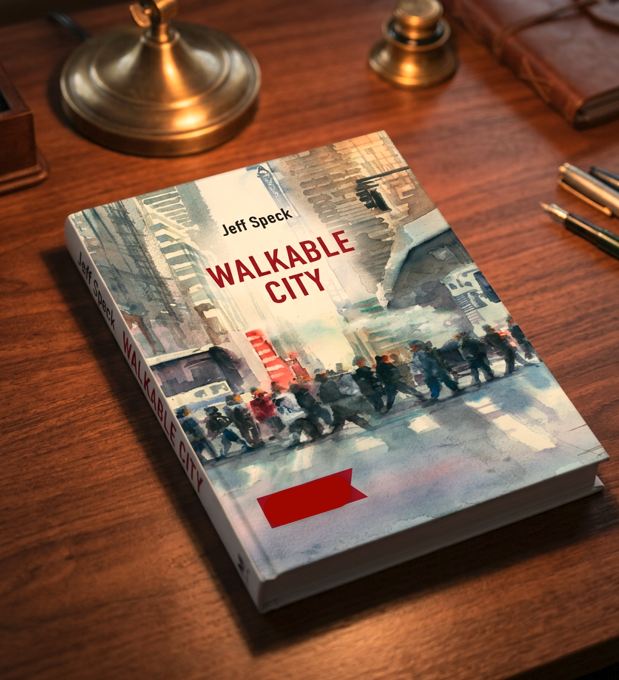
"If you want public life to flourish, build places that are easy to reach on foot."
In practice this means: a potential café customer is someone within a 5–7 minute walk. The denser and more diverse the environment in that radius, the higher the chance they'll stop in. Passing cars and storefront visibility are just decoration if there are no anchor points nearby.
Three location factors that actually affect revenue
Foot traffic — but not just any
1,000 passersby per hour at a subway station aren't equal to 1,000 at a park. Transit flow rarely converts above 0.5%, while people in strolling zones stop more willingly. Analyze not just numbers but context: where people are going, whether they have time and reason to slow down.
Competition — not the enemy, but a calibrator
Café cluster
Many avoid places with 3–4 cafés already. But a cluster creates habit: guests know there's coffee here.
Standalone spot
What matters isn't quantity but formats — if neighbors are all specialty and you focus on combos and donuts, you're not competing but complementing.
"Environmental balance" — a composite metric
A park or business center alone doesn't guarantee flow. What matters is the ratio: how many offices, schools, transit stops, and green spaces are within walking distance. Places with a "positive balance" — high daytime population density and reasons to linger — deliver 30–50% more morning checks.
A café's strength isn't just in the spot but in the movement scenario around it.
Self-diagnosis: 5 questions before signing the lease
How many residential and office units within 400 meters?
If fewer than 800 potential daytime visitors — traffic will be unstable.
Is there an anchor — subway, university, large office hub?
An anchor provides baseline load at peak hours.
How many direct competitors in the same radius, and what's their format?
Three identical cafés on one intersection — risk for all.
What's the real walking speed from the stop to your door?
Obstacles, missing sidewalks, or heavy traffic cut the accessibility radius in half.
What will this area look like in a year?
Planned construction and transit route changes can kill or create traffic.
Simple interpretation: three or more "not satisfied" answers — look for another spot or prepare an "attract from outside" strategy that almost always costs more than rent.
How to automate what you just read
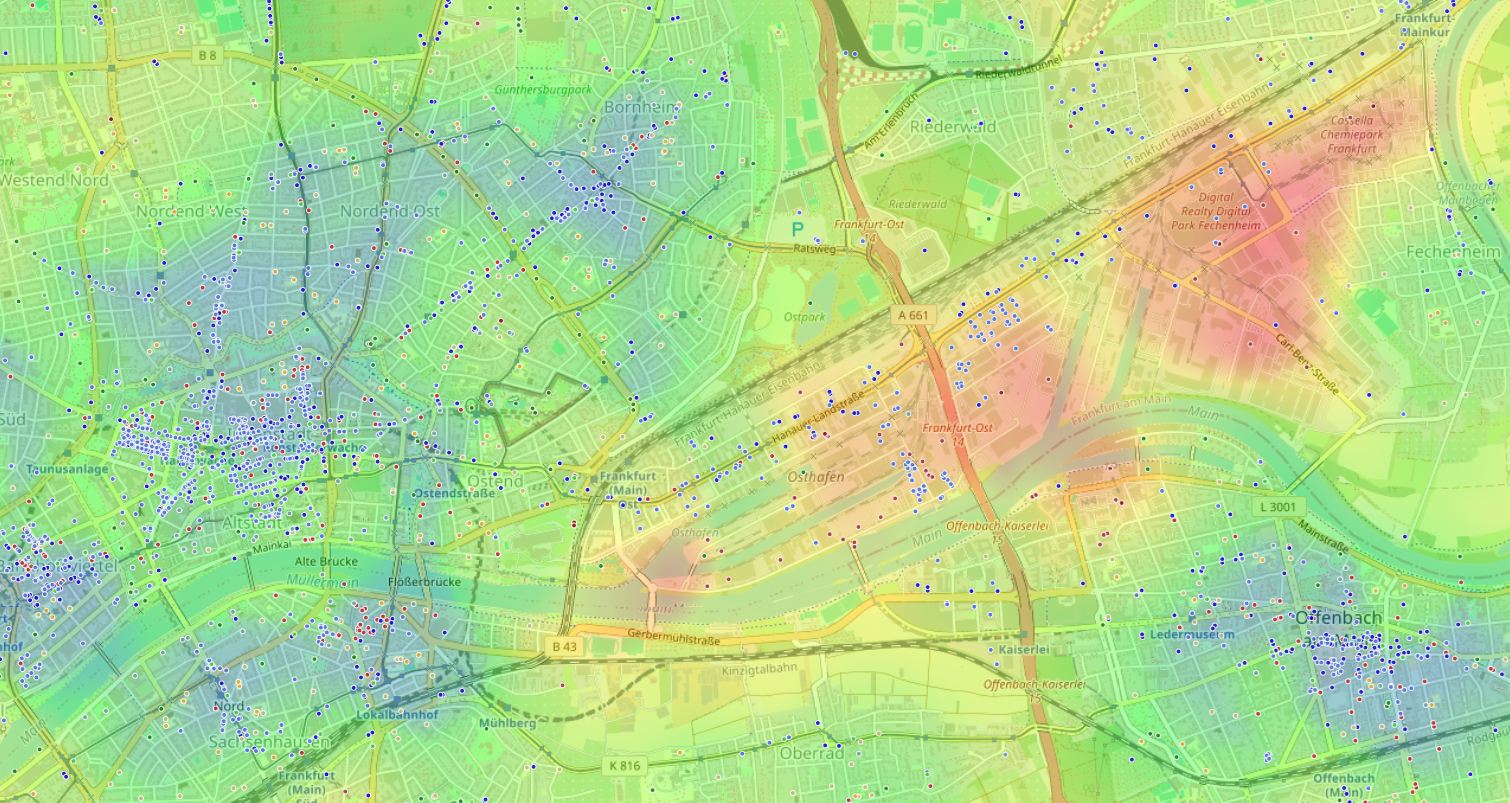
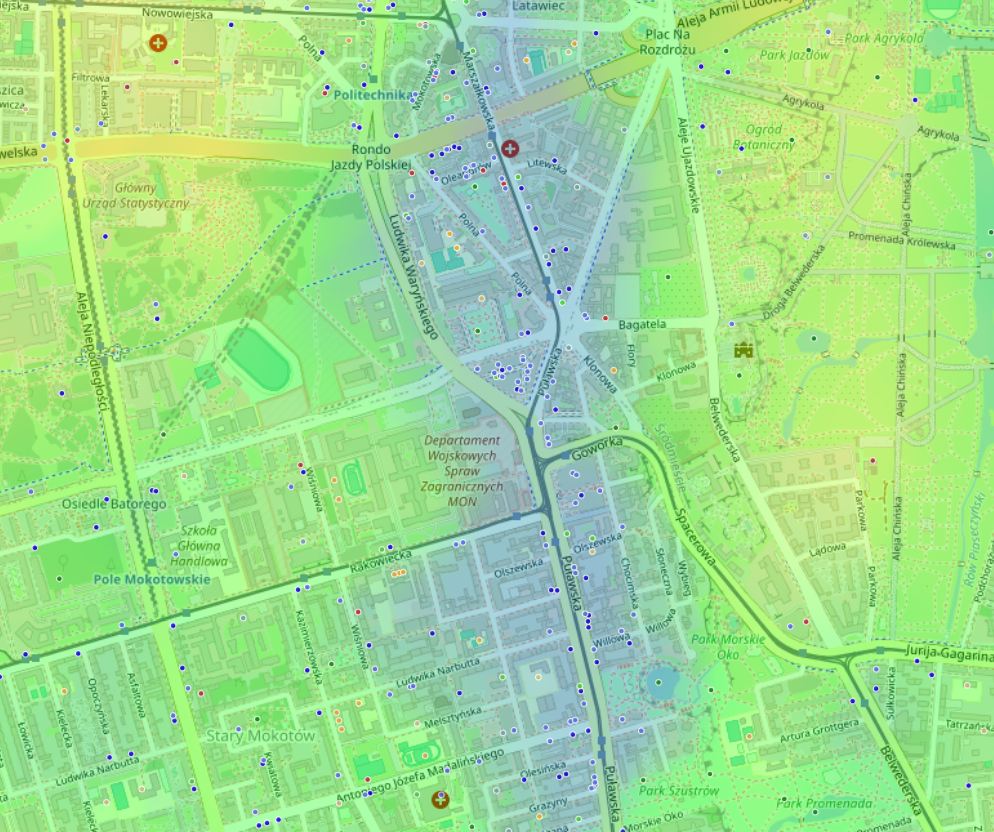
The hardest step is gathering data on pedestrian paths, competitors, and access time for several options at once. HotMap solves this: you set categories (cafés, offices, transit) and environmental balance, and the system overlays a heat layer — red zones mean negative balance, green means an ideal factor mix.
You don't have to call brokers — load the neighborhood you're interested in, compare three addresses under one scenario, and immediately see which spot promises the best morning flow.
Try it on your own example — load the neighborhood of your future café.
Conclusion
Location isn't luck but a measurable factor. Intuition may point to a promising block, but only foot traffic and environmental analysis turns a guess into a business plan.
The choice is expensive; a miss costs even more. Arm yourself with data — and let every morning start with a full dining room.
Frequently asked questions
What's the minimum foot traffic a café needs?
For a takeaway format — at least 600 people per hour on weekdays. For a full dining room — 150–200 "strollers" per hour within a 5-minute walk.
Can you open far from the subway?
Yes, if there's dense residential development and no direct competition. But budget for habit-building: people won't change routes for a new logo, so the first year will likely be unprofitable.
How does HotMap save time?
The service delivers a ready environmental balance map in seconds instead of manually hunting down OpenStreetMap, cadastral data, and field measurements. It's not a replacement for legwork but an accelerator for the very first screening.