Introvert in a big city: how to find an apartment for a quiet life without giving up amenities
You can live downtown and wake up to birdsong, not a garbage truck. A concrete approach that turns apartment hunting upside down — and shows where real oases of calm hide.

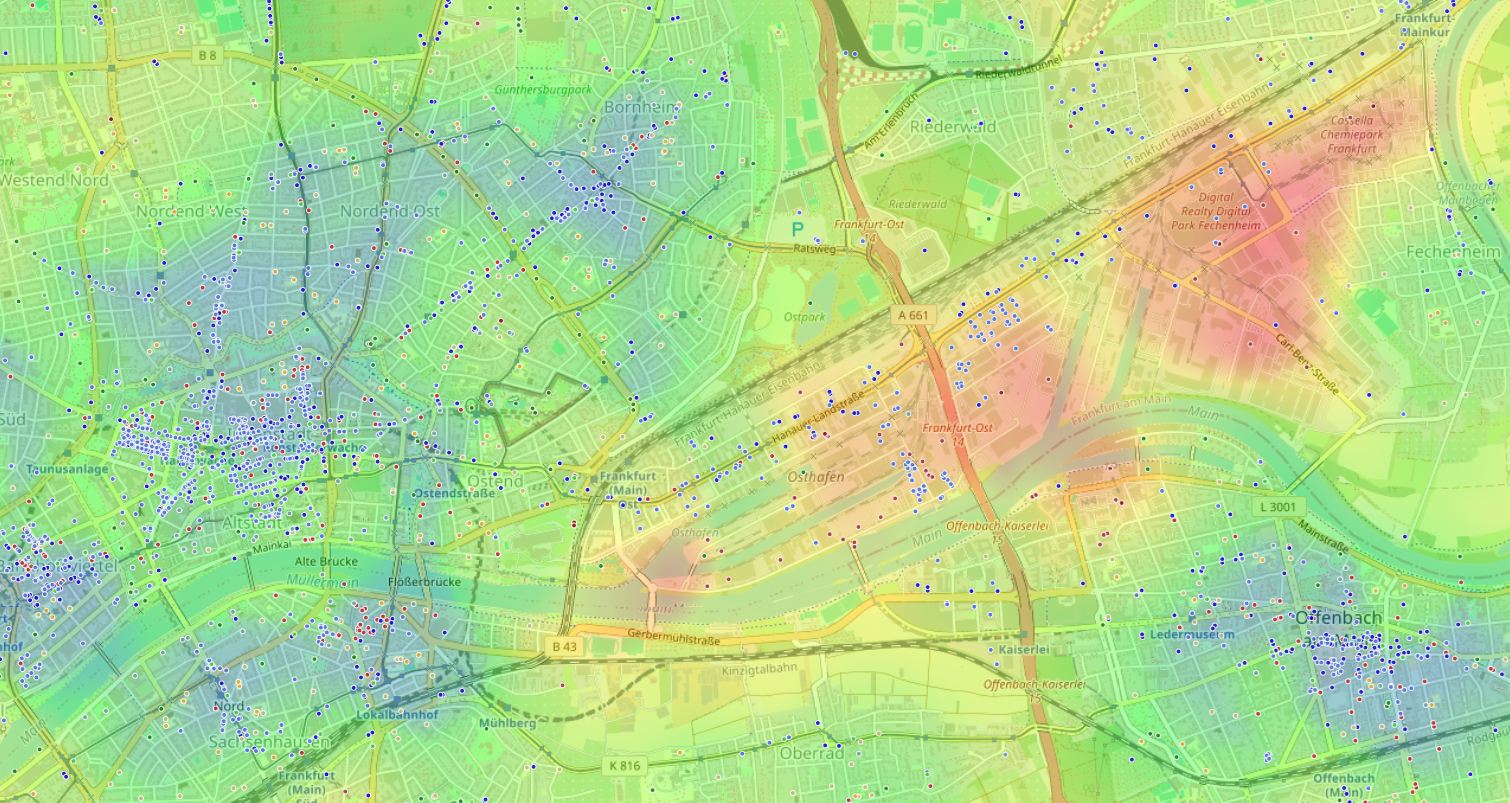
What if the old rule "want quiet — move to the suburbs" has long been outdated? This article offers an approach that turns apartment hunting upside down. You'll see how the urban environment can be measured and where real oases of calm hide.
Why we get tired of the city more than we think
Remote work and mindfulness culture made quiet not a luxury but a hygiene minimum. We filter options by budget and square footage but miss the main energy drain — sound and visual noise outside the window.
Urban stress accumulates unnoticed: an extra 15 minutes in traffic to the only quiet park, a 24-hour store with drunk crowds under the windows, endless renovation in the neighboring office building. Ignore the surroundings and you risk an apartment you want to escape. Symptoms — chronic fatigue, irritability, unwillingness to leave home.

"Time is the currency of city life. If you spend it overcoming barriers created by poor planning, you pay with your health."
We interpret this as: every minute lost on the way to a pharmacy, park, or favorite café isn't just inconvenience but direct damage to quality of life.
Three traps that make us keep getting it wrong
Myth: quiet = far from the center
Many think peace is only possible in a bedroom district on the outskirts. In reality noise comes from pinpoint factors: construction, a highway, a night bar under the windows. Inside a block it can be quiet as a forest, though life boils 200 meters away.
Myth: looking at the subway map is enough
We're used to measuring distance to work but forget "distance to life." Pharmacy, market, quiet square — if they're more than 10–15 minutes on foot, we subconsciously give them up.
Myth: one perfect apartment solves everything
Choosing a district is choosing a daily scenario. You can buy a dream apartment, but if an evening walk turns into a quest along a noisy highway, joy fades fast.
How to assess the invisible: measuring quiet and accessibility
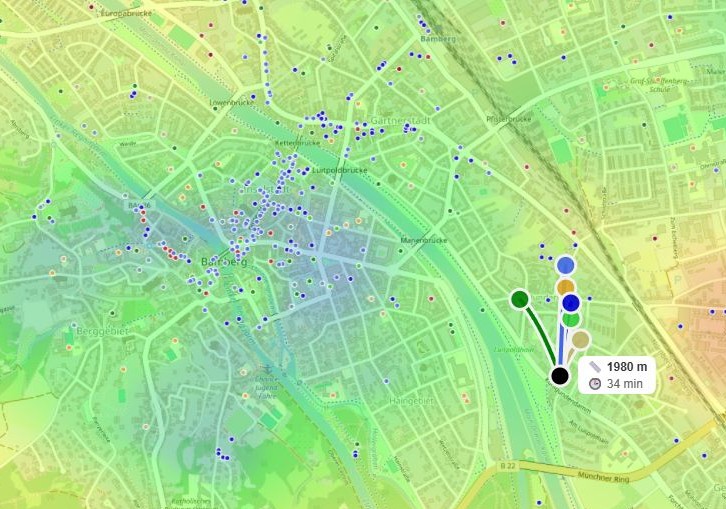
Imagine an X-ray of the urban environment: cool shades for comfortable zones, warm for sources of discomfort. Jeff Speck used this approach in Walkable City: a route should be not just short but interesting and protected.
In our case it's an apartment where quiet and amenity accessibility don't contradict each other but combine into one balance.
15-minute accessibility map around a specific building. Parks — green markers, pharmacies — red, markets — orange. More markers in the radius means higher "quality of life without a car."
Ideal housing for an introvert isn't the most remote but the most balanced. A quiet courtyard but a bakery two steps away; a bedroom without road rumble but a coworking five minutes' stroll.
Three parameters to check before viewing an apartment
Noise pollution index
Not only transport but supermarket ventilation, a school stadium, night venues. A noise source on the first floor can poison life on the 15th.
Time spent on routine
How often per week do you go to the store, pharmacy, walk the dog? Multiply time by frequency. A 7–10 minute daily difference gives up to 60 hours a year — almost three full days of life.
Density of "quiet" attraction zones
Park, square, embankment, quiet café, library. The more such anchors in the radius, the easier recovery becomes.
Action plan for scouting a district
Step 1. Build a digital portrait of the point
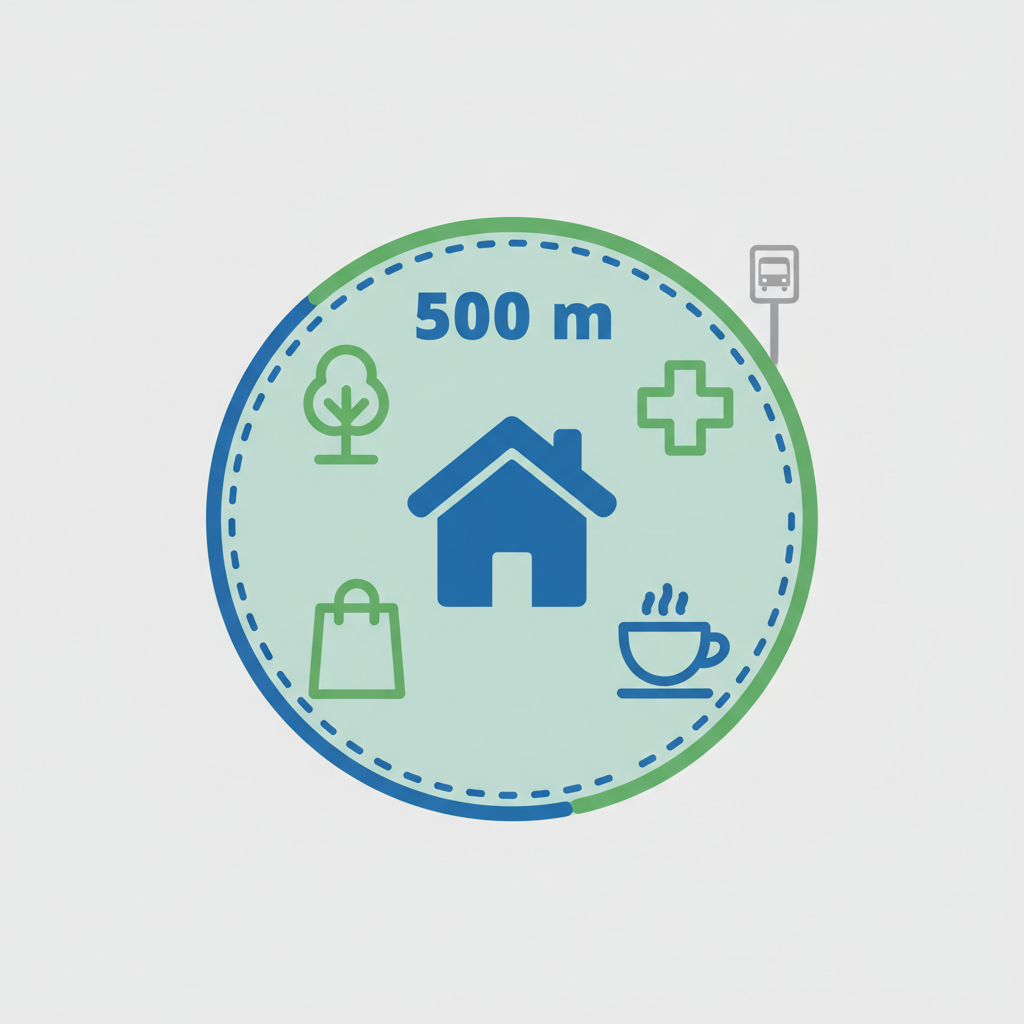
Before viewing, open the map and mark everything that shapes your daily routine: grocery store, running spot, bus stop, pharmacy. Circle them with an 800-meter radius — ideal walking accessibility.
Step 2. Conduct a "quiet hour" on site
Come to the district on a weekday evening around 7–8 PM. Sit in the courtyard, walk from the subway. Listen: do cars honk, does ventilation rumble, can you hear neighbors talking? More honest than a daytime viewing in silence.
Step 3. Compare lives, not square meters
Take three budget-equivalent options and compare not area but weekday scenario. How often you'll leave home, where you'll go, what face you'll return with. The apartment winning on "scenario" almost always beats an extra 5 square meters.
Manual labor or smart optics: how to speed up the search
One main barrier is gathering dozens of scattered factors into one picture. Manually you can recheck maps for hours and still miss construction behind the next block.
HotMap overlays a heat layer that instantly shows zones with ideal balance of quiet and amenities. You choose what matters — quiet parks, absence of nightclubs, proximity to cultural venues — and the system highlights comfortable oases. No magic, only calculation. Open HotMap and switch to "Quiet and calm" mode. The ideal place may be a couple of blocks from where you weren't even looking.
Summary: quiet as a choice, not a compromise
Finding an apartment for an introvert isn't fleeing civilization but precisely tuning personal space in the city. We looked at how to measure noise, count time on routine, and compare scenarios, not meters. Peace is available downtown too if you know where to look.
Start small: pick one point on the map, study its surroundings on three parameters — and feel the difference. The best apartment is the one you don't want to escape, even when the city is noisy outside.
Frequently asked questions
Do you need to be an urbanism specialist to use a heat map?
No. HotMap is built for city dwellers, not analysts. You simply choose what's "good" for you (e.g. parks and cafés) and what's "bad" (nightclubs and factories), and the map recalculates the balance.
Can you trust automatic assessment more than your own feelings?
Automatic assessment is support, not replacement. It helps filter out clearly unsuitable districts and save time on viewings. The final verdict stays with you and your "quiet hour" on site.
What if the ideal district on the map turns out inconvenient in reality?
The map shows objective infrastructure but not personal associations. Treat it as a compass that points direction but doesn't guarantee every step will be perfectly smooth.