Bread, milk, and pills: How to measure real store accessibility for a country home?
Every extra kilometer to the nearest supermarket steals about 6 hours from you per month. Almost a full day per year — just to buy groceries. When moving to the countryside, we rarely think about this number, yet it determines whether you'll enjoy life or live behind the wheel. This story is about turning "far away" into measurable time and making a decision with open eyes.

Cottage village without infrastructure
Beautiful homes, but the nearest supermarket is 12 km down a dirt road.
Dacha in a gardening association with a seasonal kiosk
Bread nearby in summer; in winter — only a drive to the district center.
Village with a rural shop 300 meters away
Basic groceries on foot, but pharmacy and big shopping — in the neighboring village.
Why "a store 5 kilometers away" isn't what you think
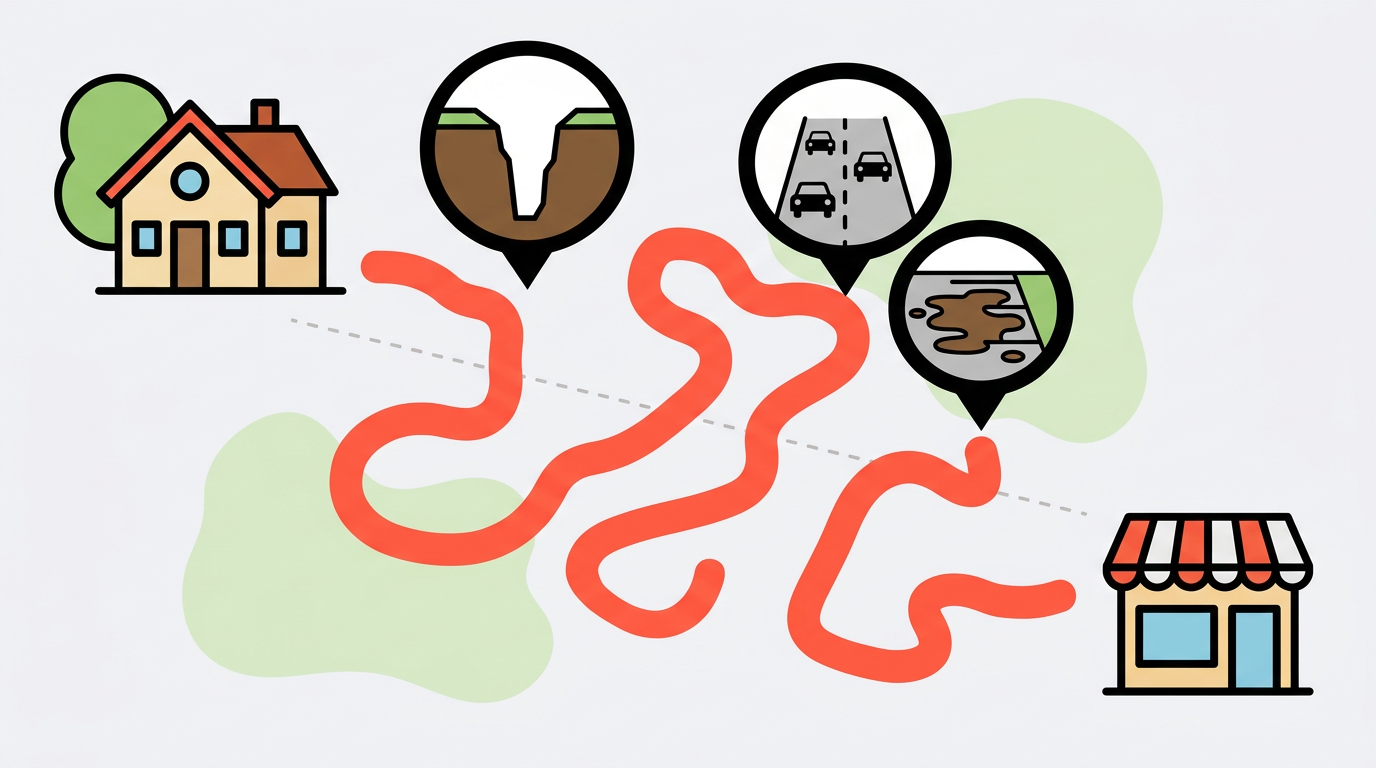
Remote work gave the freedom to live outside the city. But along with quiet comes an everyday trap: a spontaneous "run for bread" turns into a logistics operation. First you draw a straight line on the map and rejoice that the highway is only 4 km away. Then reality hits: a dirt road with no sidewalk, supermarket parking on weekends, queues, and heavy bags. Ignoring this "small thing" leads to a chronic feeling that you're servicing the house, not living in it.
"The real price of a home isn't the mortgage — it's the minutes you lose on the distance to everything that matters to you."
What looks like 5 minutes actually becomes a 25-minute quest. Simply put: accessibility isn't kilometers — it's minutes of your life given to the road.
A store 15 minutes away is an achievement, not convenience
Many think 15 minutes on foot to a store means "right nearby." In reality 15 minutes one way means half an hour of daily walking with bags — in rain, ice, and darkness. And if you also need the pharmacy, that's an hour. The misconception survives because in the city 15 minutes on foot fly by unnoticed: asphalt, streetlights, shop windows. On a country road without lighting or sidewalk, those same minutes feel different and more dangerous.
Practical takeaway: evaluate walkability not by straight line, but by the real path — accounting for terrain, crossings, and surface quality.
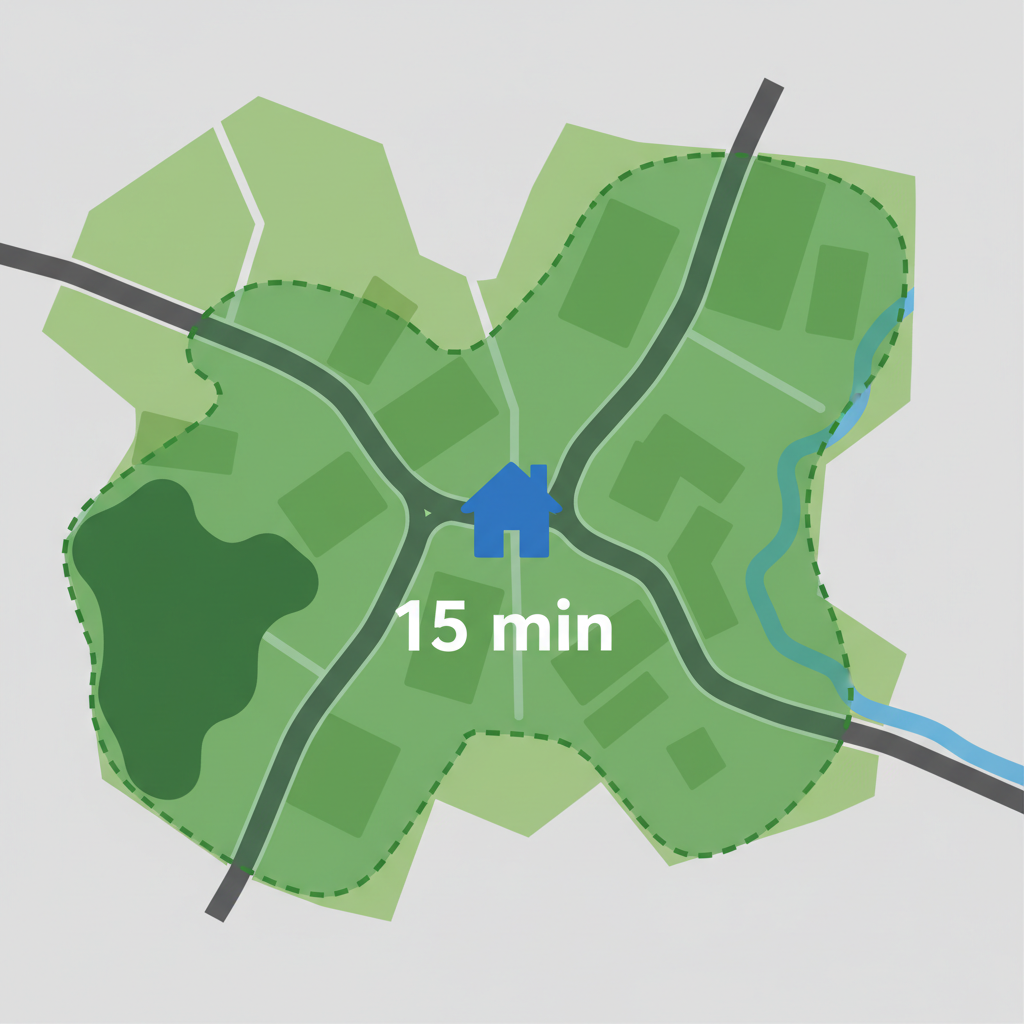
The zone of real 15-minute accessibility isn't a circle — it's an irregular shape depending on paths and roads.
Bread around the corner or a hypermarket once a week: what really controls your time
Daily purchases (bread, milk, fresh vegetables) should be within a five-minute walk, and the pharmacy within ten. Everyone has a limit of "time costs" after which spontaneous trips disappear. If the bakery is more than 10 minutes away, you stop going daily and switch to weekly shopping. The result — constant planning, forgotten small items, and overpaying for delivery.
The Petrovs bought a home in a scenic spot 7 km from the district center. After a month the wife calculated: she spends 12 hours a week just on groceries and medicine. Now they're looking for an apartment closer to the city, even though they liked the house itself.

"A beautiful view out the window doesn't compensate for 12 hours behind the wheel every week."
What else affects your decision: environmental balance
Besides stores and pharmacies, other points of attraction — and repulsion — strongly affect country comfort. Here are three factors often overlooked:
School and kindergarten
If school is 20 minutes by car through traffic, mornings turn into a daily marathon.
Industrial zones and highways
A factory or motorway a kilometer away can make life unbearable because of noise and dust.
Park or forest nearby
A green area 5–10 minutes on foot often compensates for no sidewalks to the store.
Location balance
Comparing two plots
A good location isn't where everything is close — it's where pluses outweigh minuses in your personal priorities.
Kilometers mean nothing, minutes mean everything: how to calculate your time
Stop measuring distance in meters — convert it to minutes based on your real mode of travel.
- On foot: 1 km ≈ 12 minutes (on a dirt road — 15).
- By bike: 1 km ≈ 4 minutes.
- By car: 1 km ≈ 2–3 minutes without traffic, but add time for warming up, parking, and "quick stop in another aisle" — total 7–10 minutes per stop.
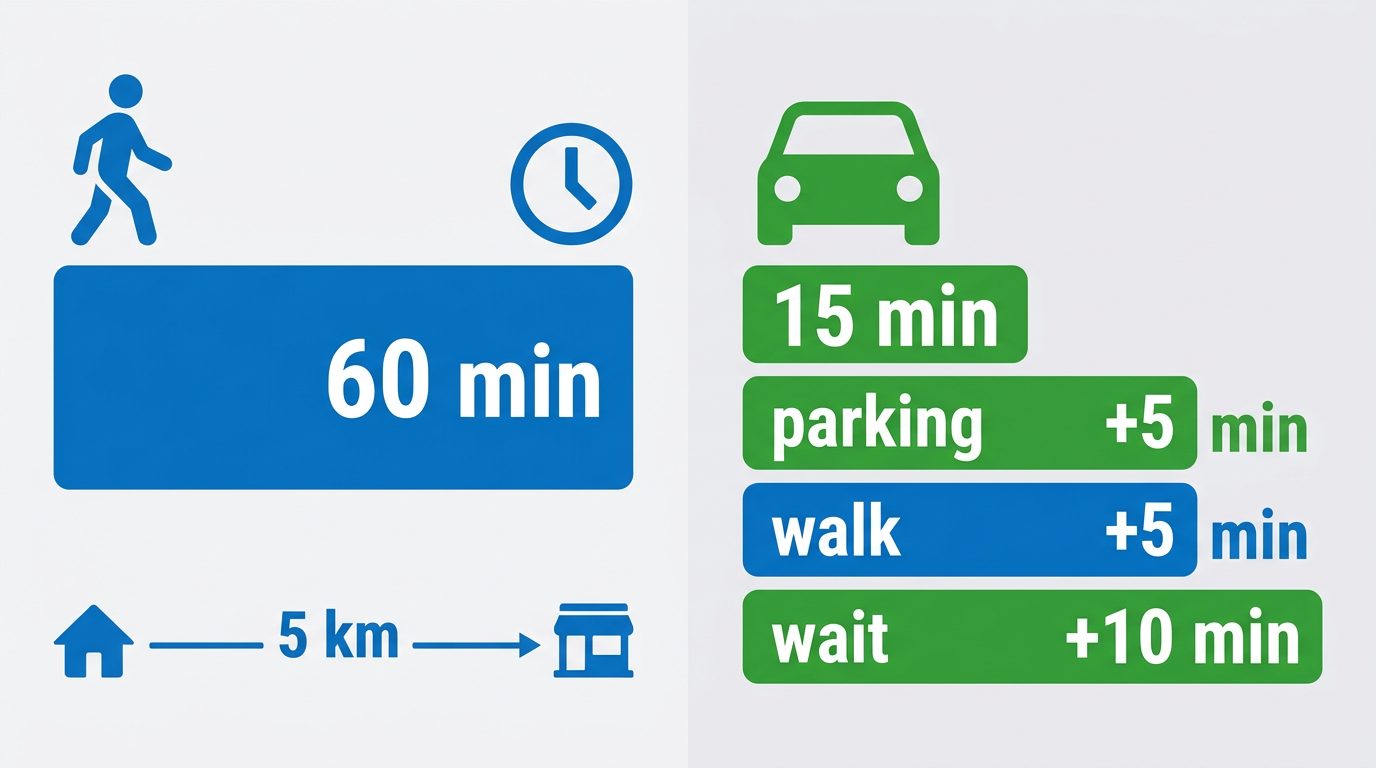
Multiply by average visit frequency: pharmacy twice a week, bread five times, hypermarket once. You get an honest weekly time budget. That will be the main criterion.
Step-by-step plan: evaluate a location in 20 minutes
Mark key points
Pin three places: nearest grocery store, pharmacy, bakery or farm kiosk. Look not at chain name, but at opening hours and reviews about product freshness.
Build isochrones
Walking isochrones for 5, 10, and 15 minutes — in any geo service or manually along the road network. Common mistake: drawing circles instead of the real path along trails and sidewalks.
Overlay zones on the plot
If the store isn't in the 10-minute zone — daily trips become torture. If there's no pharmacy in the 15-minute zone — prepare for planned pill shopping.
Account for season
In winter paths get snowed over, there's no lighting, walking speed drops by half. Add 50% to time for the winter scenario.
Compare with your limit
Compare the weekly time budget with what you're willing to spend. If the number exceeds 7–8 hours a week — country life may bring more stress than joy.
When you want to press "automatically"
Building isochrones manually for a dozen categories, accounting for balance of schools, parks and industrial zones, converting everything to minutes and comparing three plots — fascinating, but time-consuming. And most importantly — easy to miss a non-obvious factor, like a factory two kilometers away that spoils the evening air.
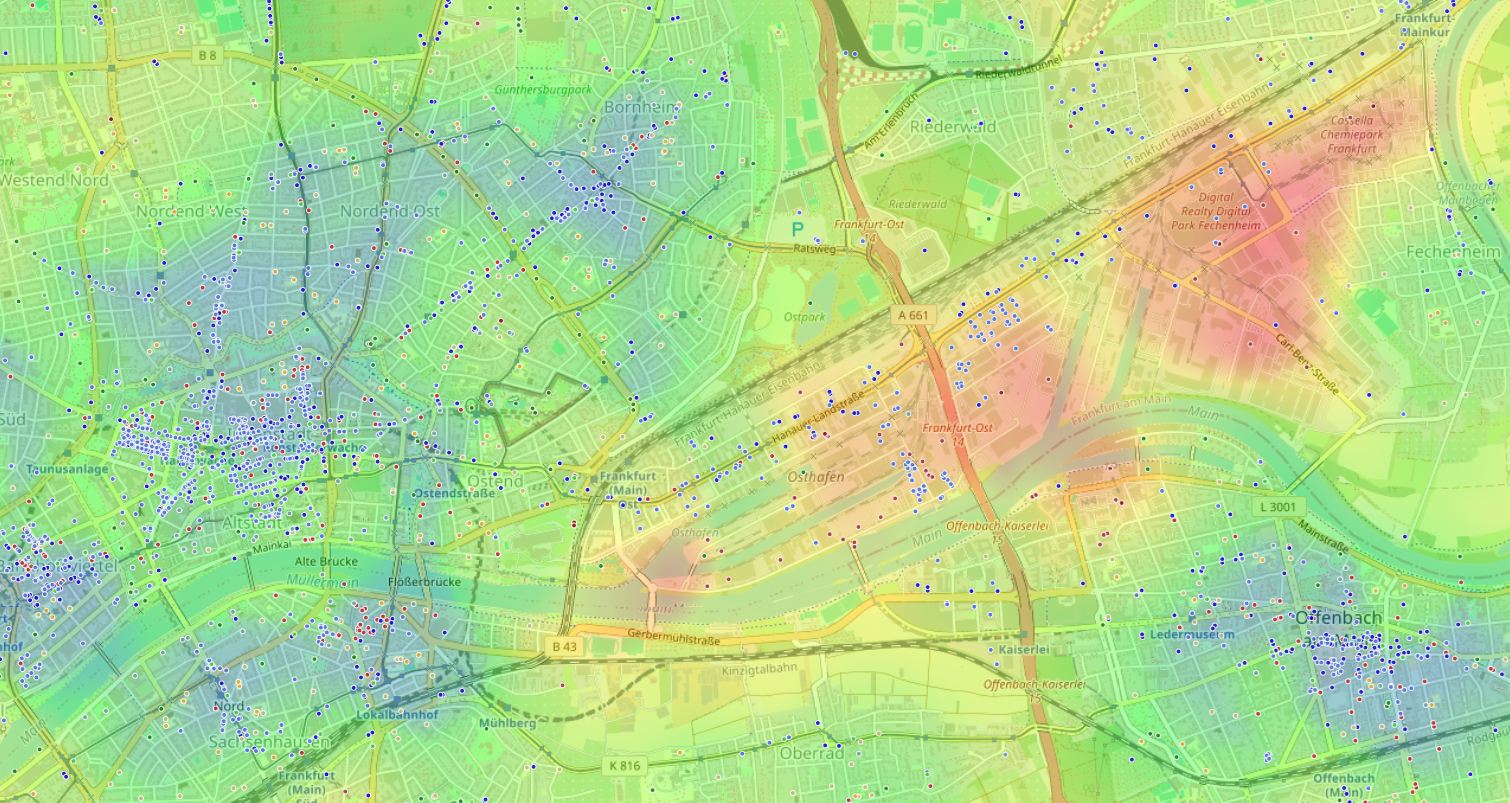
HotMap was built for exactly this analysis — a geographic information system that visualizes the balance of categories you need. You choose what matters (groceries, medicine, quiet, entertainment), and HotMap builds a heat map and shows weekly time costs for any point. It's like Walk Score for the countryside, but with personal priorities and without the illusion of straight lines.
Try it on your example — see how many minutes per week your future country life will consume.
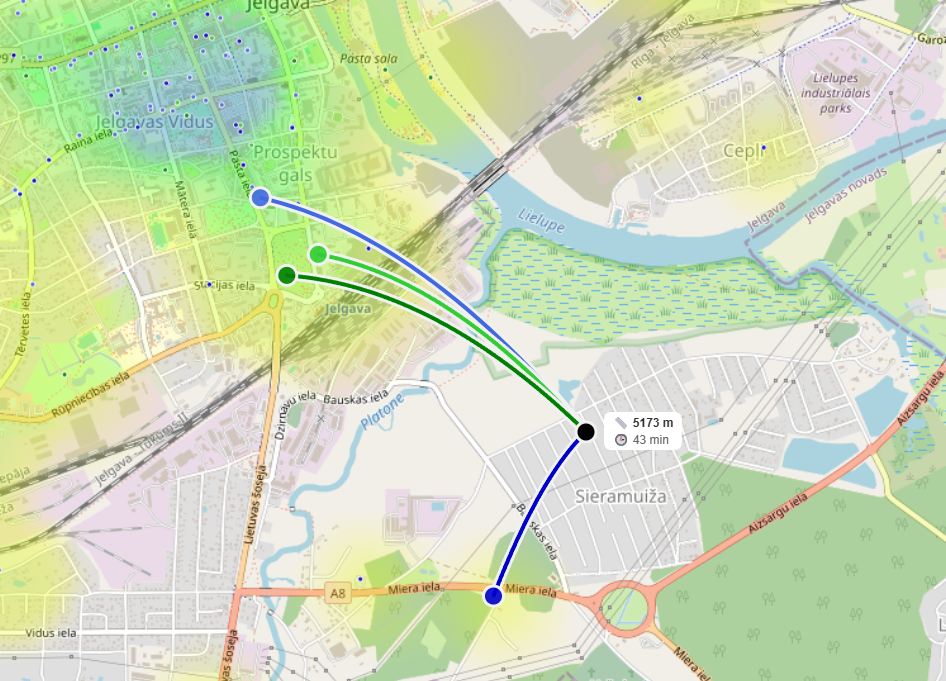
The heat map instantly reveals zones where bread, milk, and pills are truly nearby.
Bottom line: a home starts with a bakery around the corner
Country convenience is measured not in square meters, but in minutes separating you from fresh bread, milk, and pills. We showed how to stop fantasizing and start counting real time, not straight-line kilometers. The right location is where after an evening walk you stop at the bakery, not sit in traffic to the hypermarket.
A home isn't a place to sleep — it's a space for everyday happiness, and it should be accessible.
Are you ready to give another hour of your life for a bag of milk? The answer "no" starts with measuring distances correctly.
Frequently asked questions
What walking radius is ideal for daily shopping?
5–7 minutes of real path — at that distance people go to the store spontaneously, without seeing it as a burden. Anything beyond 10 minutes switches the family to weekly shopping mode.
Can you trust automatic isochrone calculations?
Most services build isochrones along the road network, which is close to reality. But always check pedestrian trails and seasonal factors: in winter paths may shorten or become impassable. Services like HotMap let you manually adjust influence radius, adapting the model to a specific plot.
What if the ideal location isn't affordable?
Look for a compromise by priority. For example, sacrifice hypermarket proximity but ensure walking distance to a pharmacy and vegetable kiosk. The rest can be ordered for weekly delivery — then travel time goes only to what you need here and now.