Traffic cannibalization: why opening next to competitors isn't always bad
We're used to thinking a competitor neighbor means automatic revenue sharing. But the highest-grossing restaurants and cafés open side by side. According to the Urban Land Institute, three or more similar venues in a block raise overall foot traffic by 20–40%. Let's see how to turn fear of "cannibalization" into a growth source.

Cluster instead of competition
In this article you'll see what data helps pick a truly strong location — and why a standalone spot on a deserted street often loses to a street cluster.
Not solitude but the "consumer dance"
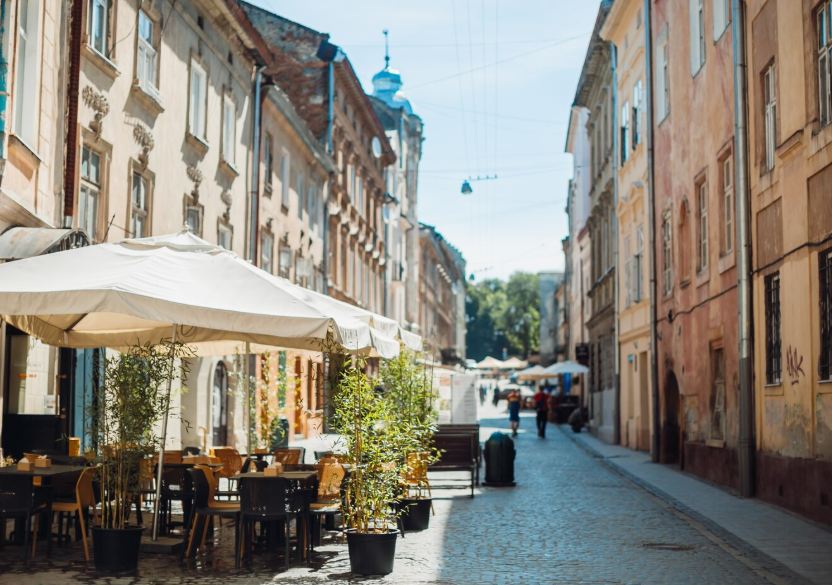
The market is no longer a line of "store — buyer." Today the customer chooses a place, not a single spot. People deliberately go to a "coffee street," "bar district," or "retail row" knowing there will be options. Refusing such proximity means dropping off the consumer's mental map: you won't be found because nobody will travel for one unknown café on a deserted street.
Standalone spot
Low traffic, high marketing costs, no impulse visits.
Street cluster
Natural flow, place recognition, mutual audience spillover.
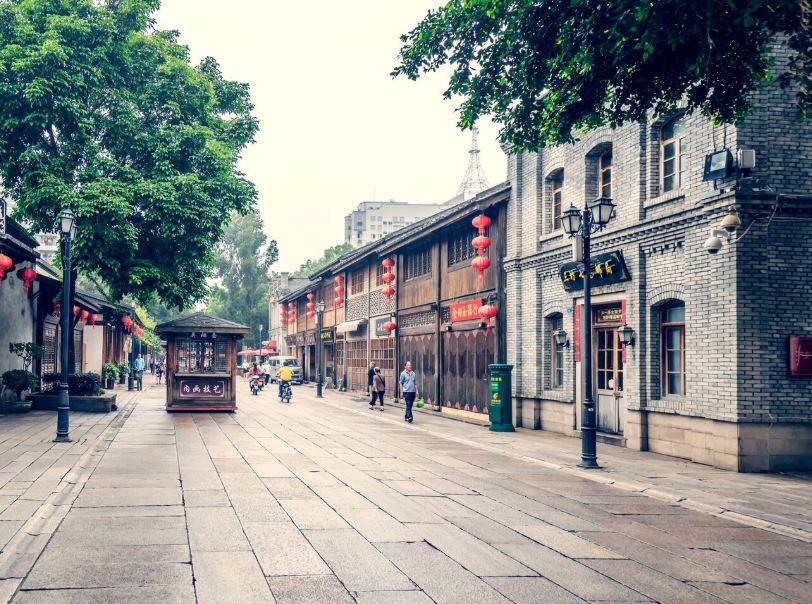
"A city's real economy rests not on abstract zones but on pedestrian routes along which people perform their daily 'consumer dance.'"
In other words: a cluster creates gravity that pulls in even casual passersby.
Agglomeration or cannibalization: where is the line?
The fixed pie myth
Many think another café splits neighborhood demand into tiny shares. In reality joint attraction expands the market.
Reality: when a third café opened on a residential street, overall street traffic grew 40% — people deliberately came to the "coffee street" knowing they'd find a free table or the drink they wanted.
Key idea: a competitor neighbor increases your potential traffic, not steals it.
Agglomeration effect on a street
Index relative to a single venue
Cognitive maps and the "cost of choice"
The consumer doesn't think in addresses — they think in districts: "I'll go where there's lots of everything." A cluster lowers the psychological cost of the trip: the customer is confident that even if the first place doesn't work, alternatives are nearby. A standalone store loses because it forces a decision in a vacuum — few will take that risk.
"Shopping streets are analog search engines. Multiple offers shorten search time and increase purchase conversion."
Spillover effect: when competitors don't compete
Not all neighbors take customers directly. Different formats attract different audiences, but all create a pedestrian "cloud."
Fine dining restaurant + trendy bar
Different audiences, but a shared sense of "prestigious and lively" attracts both.
Takeaway café + coworking café
One serves the morning rush, the other long laptop sessions; they don't rival but complement each other.
From fear to calculation: three analysis steps
Assess traffic and its quality
How many people pass, how long they stay, what's the purpose of the walk.
Competitive field map
5-minute walk radius. Look for gaps: four restaurants but no breakfast café — your chance.
Break-even point
Account for joint flow and customers from neighbors. Bonus — 10 to 25%.
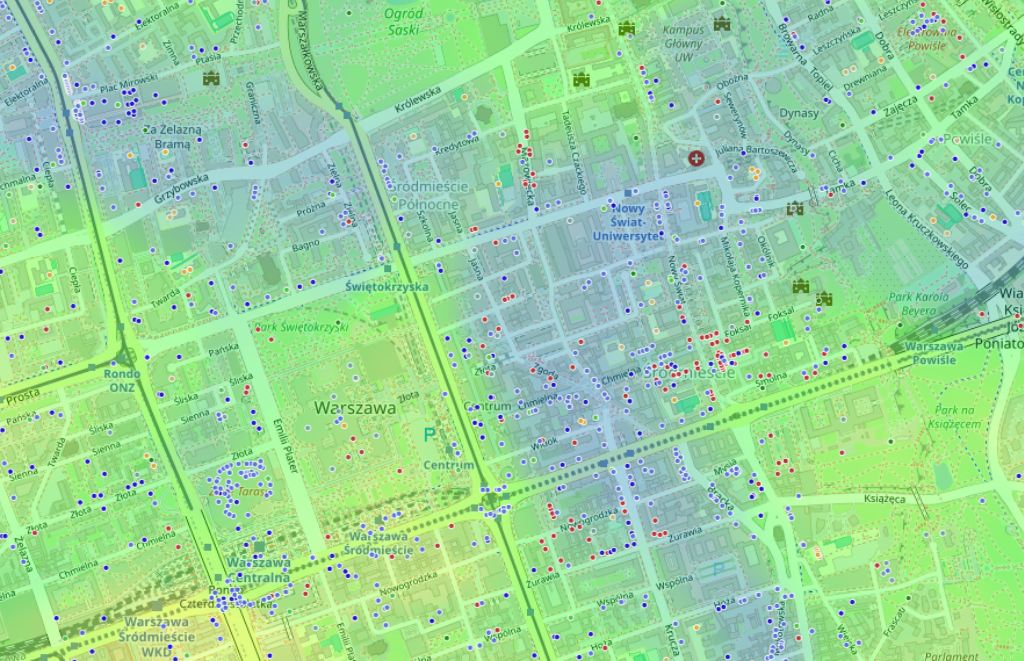
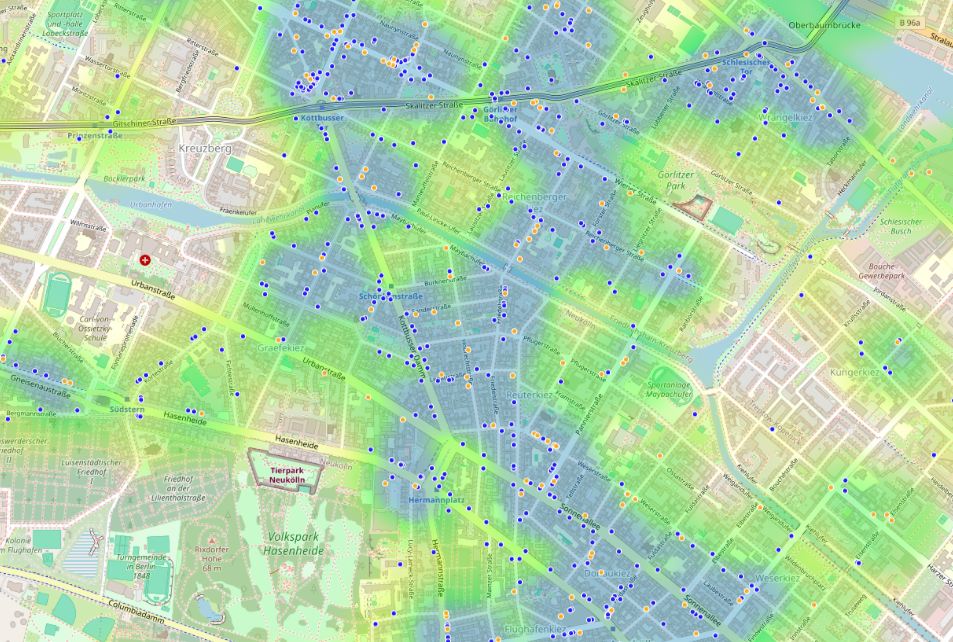
Analyzing point-of-interest concentration and pedestrian connections helps find spillover zones.
Applied self-diagnosis and a live case
Pre-lease checklist
Before signing a lease, answer four questions:
- Is the spot visible from the main pedestrian route?
- Are there at least three service or retail venues within 3 minutes?
- Does your target audience spend 15+ minutes here (cafés, strolls)?
- Can you explain in one sentence how you differ from nearest competitors?
If you scored fewer than three "yes" answers — the cluster won't work for you but against you.
Case: "Coffee and socks" on a busy alley
Situation: a small eco-goods shop decided to open next to a large health-food supermarket and a couple of cafés.
What they did: using HotMap they assessed pedestrian accessibility and a temporal heat map — confirmed dense morning and evening traffic. Launched a one-month pop-up.
Result: revenue covered rent in three days; 60% of buyers learned about the shop simply passing by from a neighboring café or supermarket. The cluster became a free advertising channel.
When manual counts hit the wall of intuition
Everything described can be done in Excel and a notebook: walk the neighborhood, manually count storefronts, time flows. But the cost of error is months of rent in a dead zone.
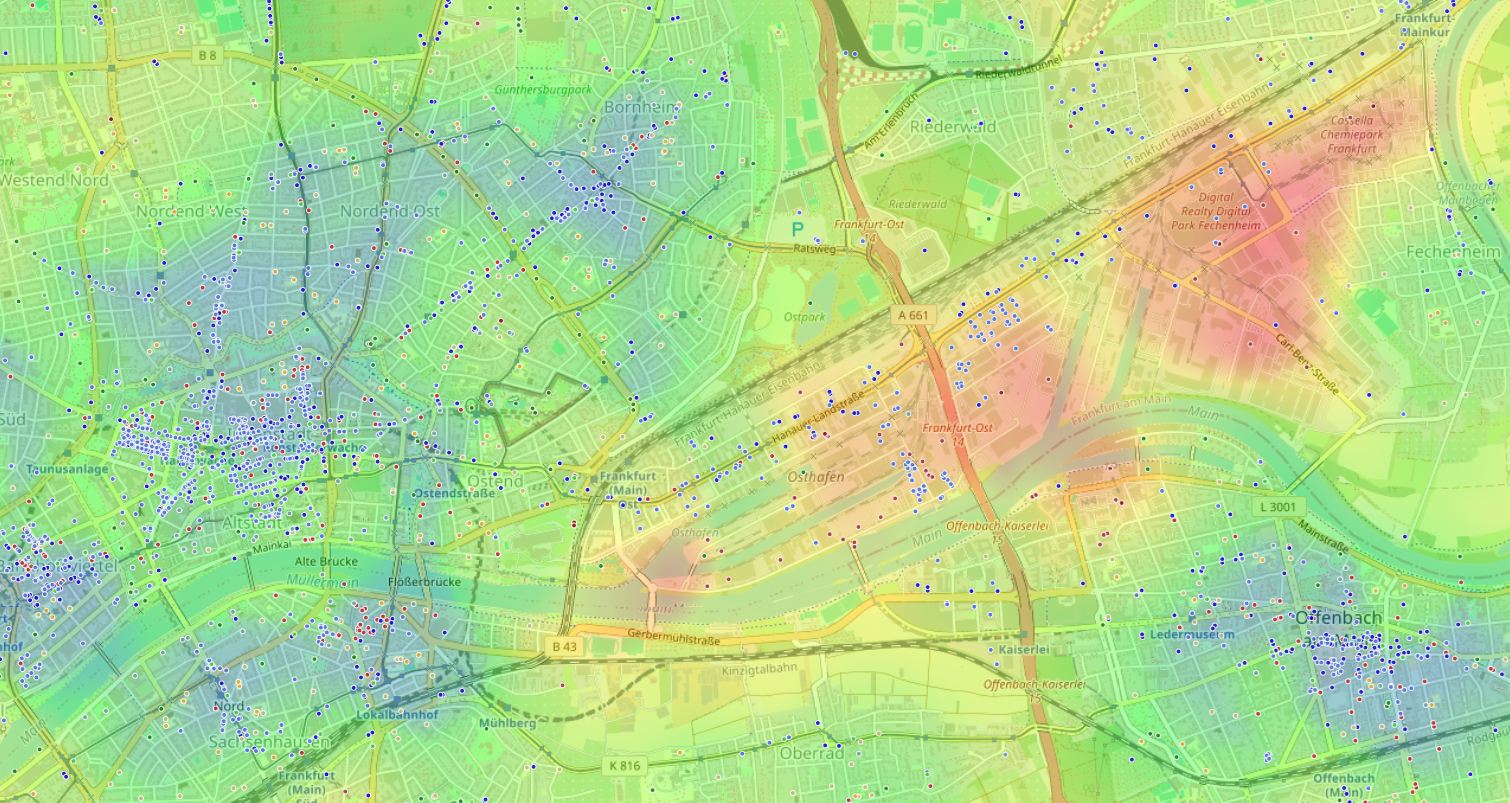
HotMap handles this arithmetic: it builds an environmental balance heat map for any point, highlighting zones with maximum concentration of needed venues and pedestrian activity. You simply select "Retail" and "Food & beverage" categories and see where proximity multiplies your chances and where it truly risks "eating" traffic.
This isn't a replacement for entrepreneurial instinct but a way to double-check it with data visible at a glance.
Proximity as strategy
Cannibalization isn't a diagnosis but a tool. It becomes a problem only with blind copying without understanding flows.
If you choose a place consciously, relying on pedestrian accessibility data and behavioral patterns, competitors become partners in attracting guests. Start simply: question the illusion of safety in a standalone spot and try thinking not in addresses but in streets.
Frequently asked questions
How do you know there are already too many competitors?
If you can't find a free niche, overall traffic has stopped growing, and rent keeps rising — time to reconsider. Pay attention to dwell time in the zone and number of venues per 100 meters of frontage.
Does the cluster principle work for online stores?
Partly. Online the analog is marketplaces: your products benefit from proximity to popular brands in search results, but the mechanics are search-based, not pedestrian. What matters is a competitive offer and visibility work.
Should you open directly opposite the same business?
Better avoid head-to-head unless you can offer a radically different experience or price. Being on the same line but a few storefronts away is optimal: joint flow builds recognition for both spots without direct collision.